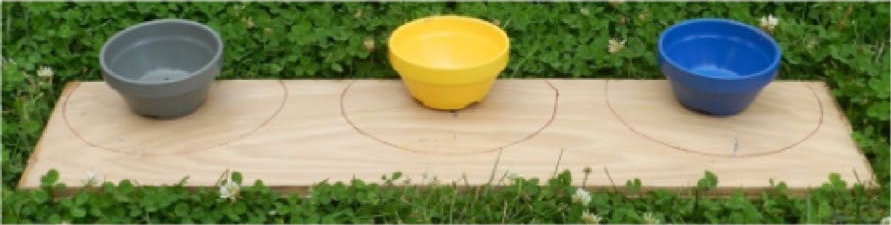
Given a choice of three bowls, pet dogs under 7 approached a yellow one first nearly twice as often as a blue one. In a follow-up analysis of two experiments, 91 of 214 dogs went to yellow first, 74 went to gray and 49 went to blue.
A 2025 study found that free-ranging dogs in India tended to approach yellow bowls first. Psychologist Jeffrey Stevens of the University of Nebraska–Lincoln and colleagues wanted to see whether pet dogs in a different setting would do the same. They set out bowls in the three colors and recorded which one each dog went to first. In one experiment, some dogs chose among bowls with identical treats and others chose among empty bowls. Yellow was a common first choice in both groups.
With dogs of all ages in the first experiment, the team found no clear color preference. A hint that younger dogs went for yellow led the researchers to recruit dogs under 7 for a second experiment. Whether preferences change as dogs age remains open. In a separate test of three shades of gray, dogs did not favor the lightest bowl, though brightness might still matter when paired with color.
The researchers say knowing which colors dogs prefer could “help guide the design of toys that maximally engage dogs’ attention.” They suggest testing that idea with toys. Color can matter in experiments, too. A dog might go straight to a bowl because of its color when a scientist is trying to learn whether the dog can find food.
The research
Color preferences in dogs: A replication study ↗
Jeffrey R. Stevens, Anwyn Gatesy-Davis, Susannah Couture and Yasmin Worth
Animal Cognition · Accepted
DOI: 10.1007/s10071-026-02124-7