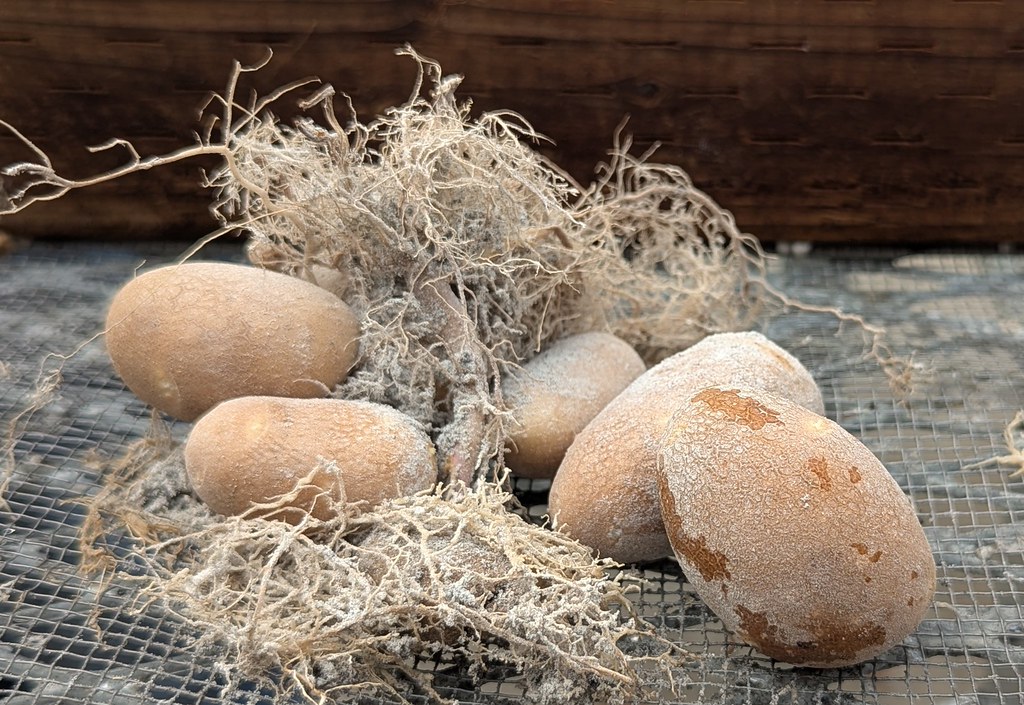
A potato patch on the moon might benefit from a familiar gardening trick. When researchers mixed worm compost into crushed rock made to mimic lunar dirt, the plants produced a harvest comparable in weight to one grown in Oregon soil.
Plant biologist Aymeric Goyer of Oregon State University and colleagues report the results November 19 in npj Microgravity. The team grew red-skinned Modoc potatoes in an Oregon greenhouse, giving every pot slow-release fertilizer. In one mix that mimicked rock from the moon’s dark plains, plants grown without compost had barely any roots. Replacing 30 percent of the crushed rock by volume with compost made by earthworms brought growth close to that in Oregon soil.
One possibility is that the compost binds metals that can stress plant roots. “We believe the compost helps balance some of the toxicity we see in lunar regolith by reducing plant exposure to harmful compounds,” says David Handy, a postdoctoral researcher in Goyer’s lab, in an Oregon State University statement.
The 30 percent mix worked in one simulated soil. In a separate test with just 5 percent compost, all five simulated soils yielded lighter harvests than the Oregon soil. The researchers found no significant rise in two natural potato toxins they measured, though some tubers had slightly higher levels of metals such as copper, zinc or aluminum. Whether the plants would fare as well in actual lunar material remains open.
Potatoes pack a lot of calories into a small growing area, a plus when space is tight. One idea for a future lunar greenhouse is to make some of the compost on site from food scraps and plant waste.
The research
Growth and molecular responses of potato to lunar regolith simulants ↗
David Handy, Anika Loeffler, Medora Knudson, Sydney Campbell, Pankaj Jaiswal, Jeffrey C. Anderson and Aymeric Goyer
npj Microgravity · Published
DOI: 10.1038/s41526-026-00668-z