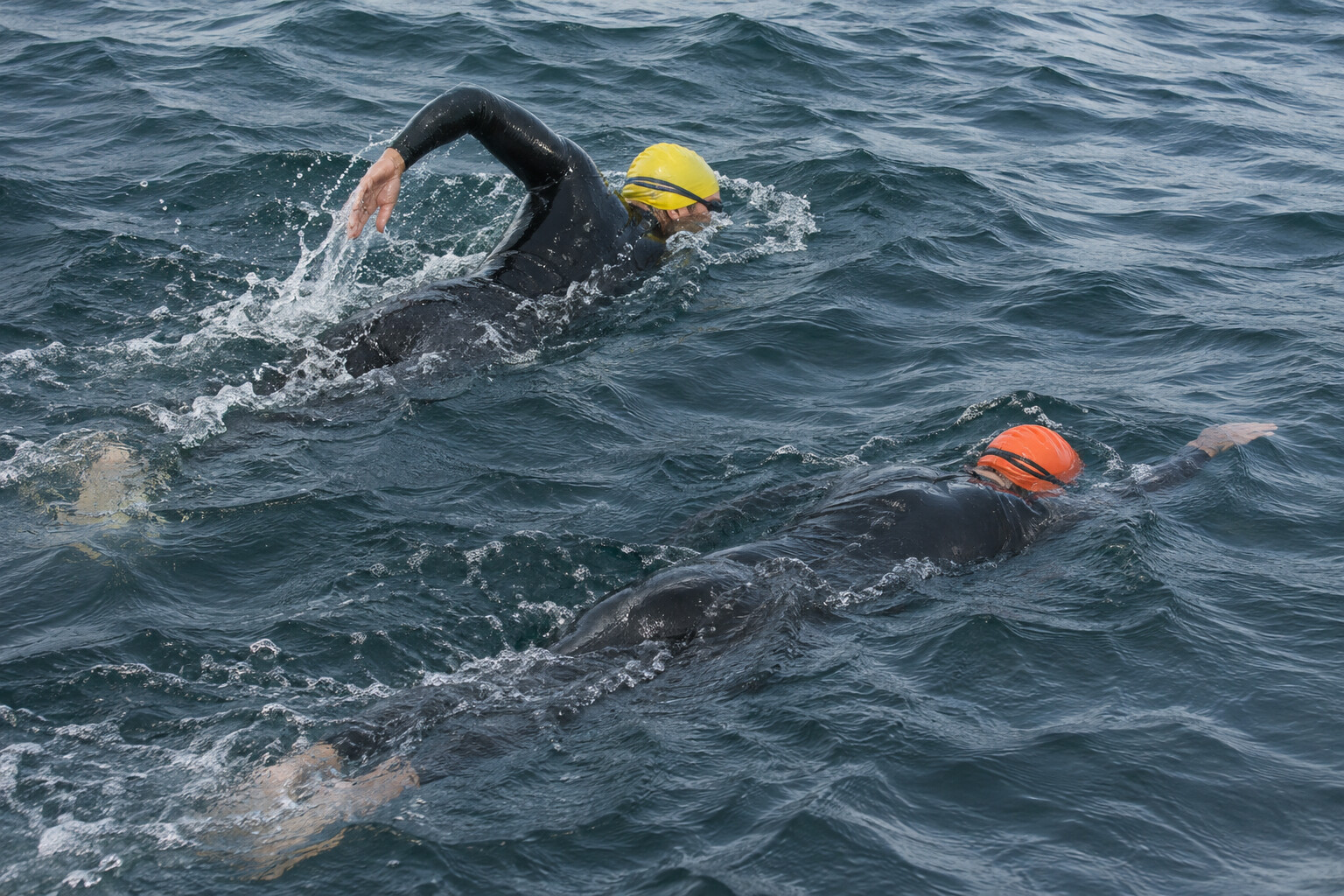
Four triathletes swam in 50-degree water wearing wetsuits. One swimmer’s core temperature fell below 95 degrees Fahrenheit. None of the other three reached that mark during their recorded swims.
Those swims, tracked in an earlier experiment, helped Henry van den Bedem of the University of California, San Francisco, and Ellen Kuhl, a mechanical engineer at Stanford University, tackle a puzzle. As they write in a paper accepted by Physical Review Research, “the same water temperature can cool one swimmer while heating another.”
Working muscles give off heat. A faster pace generates more of it, while a wetsuit slows its escape. Build matters, too. Of two swimmers with similar proportions, the larger one has less skin surface through which to lose heat for each pound of body mass. The researchers built those competing effects into a model and compared it with temperature records from four earlier sets of swims in warm and cold water.
Most of the long swims involved trained athletes. The researchers fitted the model to existing records, so it can’t tell a recreational swimmer how long it’s safe to stay in a lake.
The cold-water records held one more puzzle. Some swimmers’ core temperatures rose at first or briefly leveled off. A model that treated the whole body as one temperature missed those turns. Once the researchers allowed the core and the outer tissues to cool at different rates and exchange heat, they could reproduce that early rise even in 50-degree water.
“the same water temperature can cool one swimmer while heating another”— The authors write in Opening discussion of open-water swimming, second paragraph of the main text; quotation from the publication
The research
Thermal scaling laws for open-water swimming ↗
Henry van den Bedem and Ellen Kuhl
Physical Review Research · Accepted
DOI: 10.1103/yq2w-fsrt