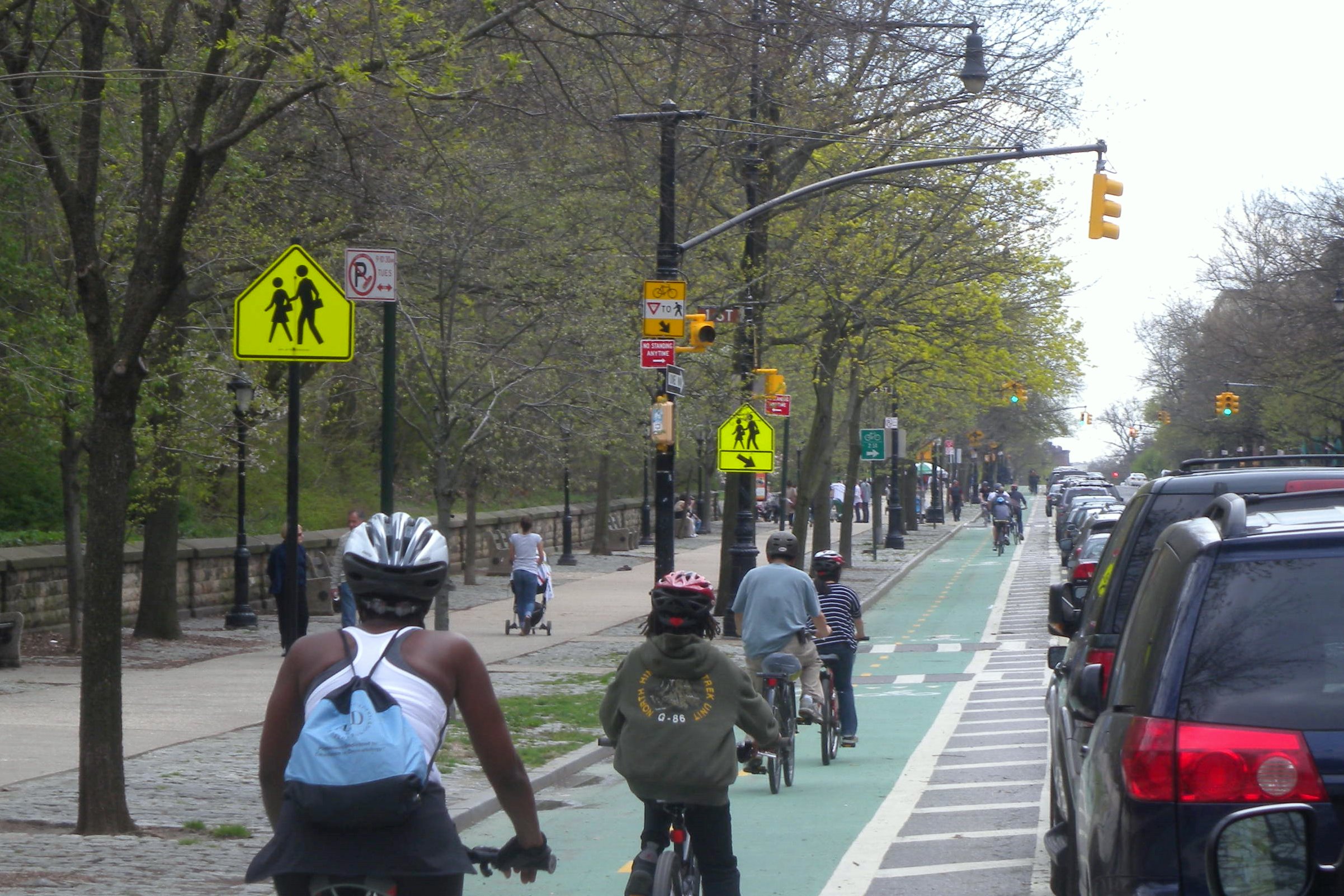
On New York City streets that looked less safe, bike-share use got its biggest boost when cyclists had a lane physically separated from traffic, a new study found. Painted lanes and shared-lane markings did better on streets that already looked safer.
Siqin Wang, a geographer at the University of Southern California, and an international team analyzed more than 90 million Citi Bike trips from 2018 through 2023. As the city added bike lanes, the researchers compared changes in trips between pairs of docking stations likely to be served by the new lanes with changes between similar pairs that weren’t. They used a computer model trained on people’s ratings of street photos to estimate how safe the areas around those stations looked.
Overall, the team estimated that trips rose by roughly a third after protected lanes went in, compared with about 10 percent for painted lanes and shared-lane markings grouped together. The gap depended on the street: protection was especially valuable where the surroundings looked less safe, while paint did more on streets that already looked safer.
The trip records showed where people picked up and dropped off bikes, not which streets they rode along. And the study measured bike-share use, not whether the lanes reduced crashes. The finding gives cities a reason to consider how a street looks and feels when deciding where to install a barrier rather than rely on paint.
The research
Streetscape perception conditions the causal impacts of low-stress bicycle infrastructure ↗
M. Mavin De Silva, Siqin Wang, Ashani Piyatilake, Sijian Tian, Santiago Garcia Gabilondo and Tadachika Nakayama
PNAS Nexus · Published
DOI: 10.1093/pnasnexus/pgag354