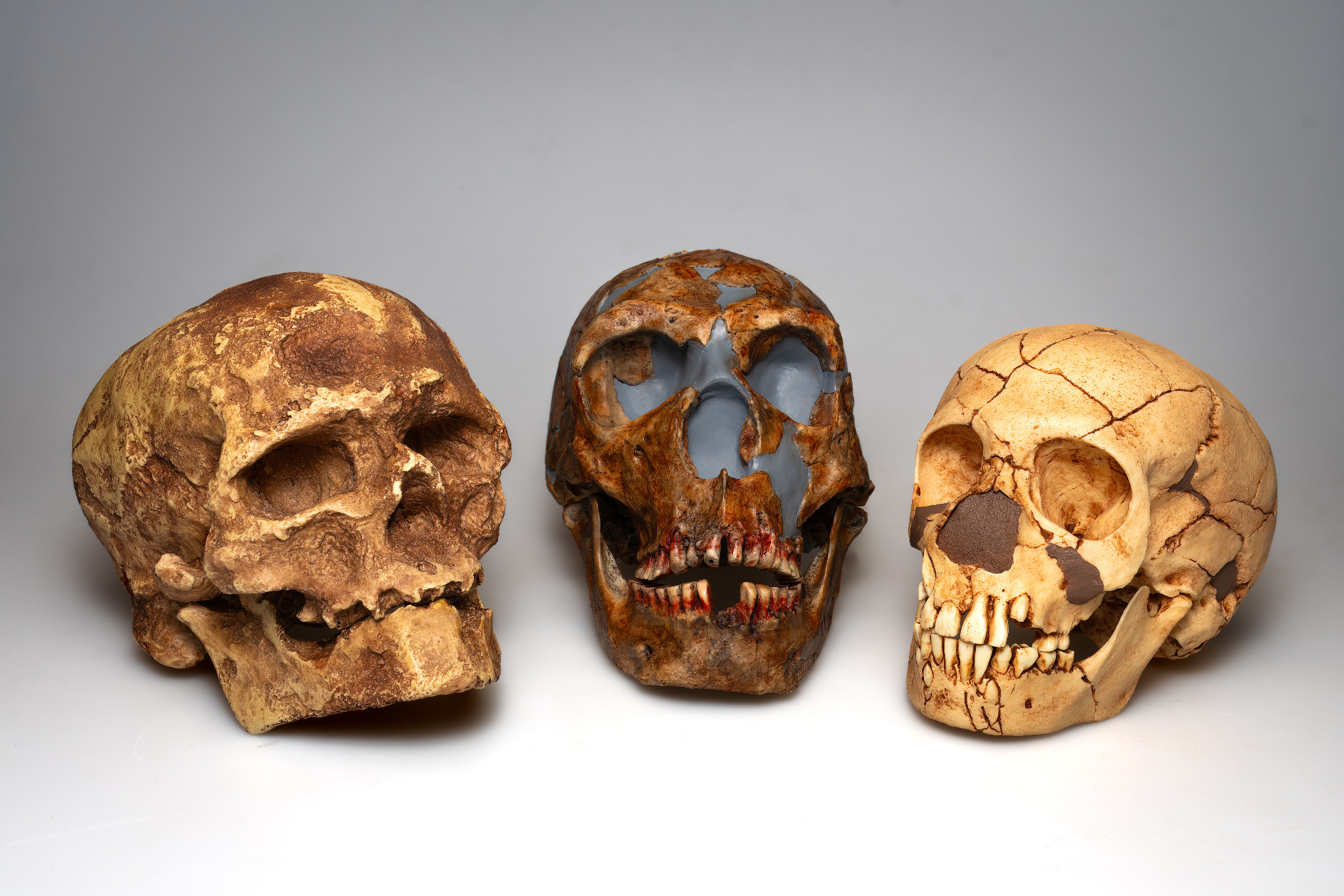
The spread of farming may explain why the share of Neanderthal DNA fell across ancient Europe but remained higher in the northwest than in the southeast.
Mathias Currat, a population geneticist at the University of Geneva, and his colleagues compared computer simulations with previously published DNA from 715 ancient Europeans. Neanderthal DNA accounted for about 2.4% of the genomes of the hunter-gatherers they studied, on average, and about 2.1% of the genomes of early farmers. Earlier work by the same team had shown that the regional pattern persisted even as the average fell. The new study tested how both could happen.
In the scenario that matched both patterns, hunter-gatherers moving into Europe from the southeast picked up Neanderthal DNA as the groups interbred. Thousands of years later, farmers carrying less Neanderthal DNA spread in the same general direction. As the farmers mixed with people already living there, the average share fell, but it stayed higher in the northwest.
The research
Tracing Neanderthal ancestry patterns through successive population expansions in Europe ↗
Alexandros Tsoupas, Claudio S. Quilodrán, Jérémy Rio and Mathias Currat
Science Advances · Published
DOI: 10.1126/sciadv.aeg6161