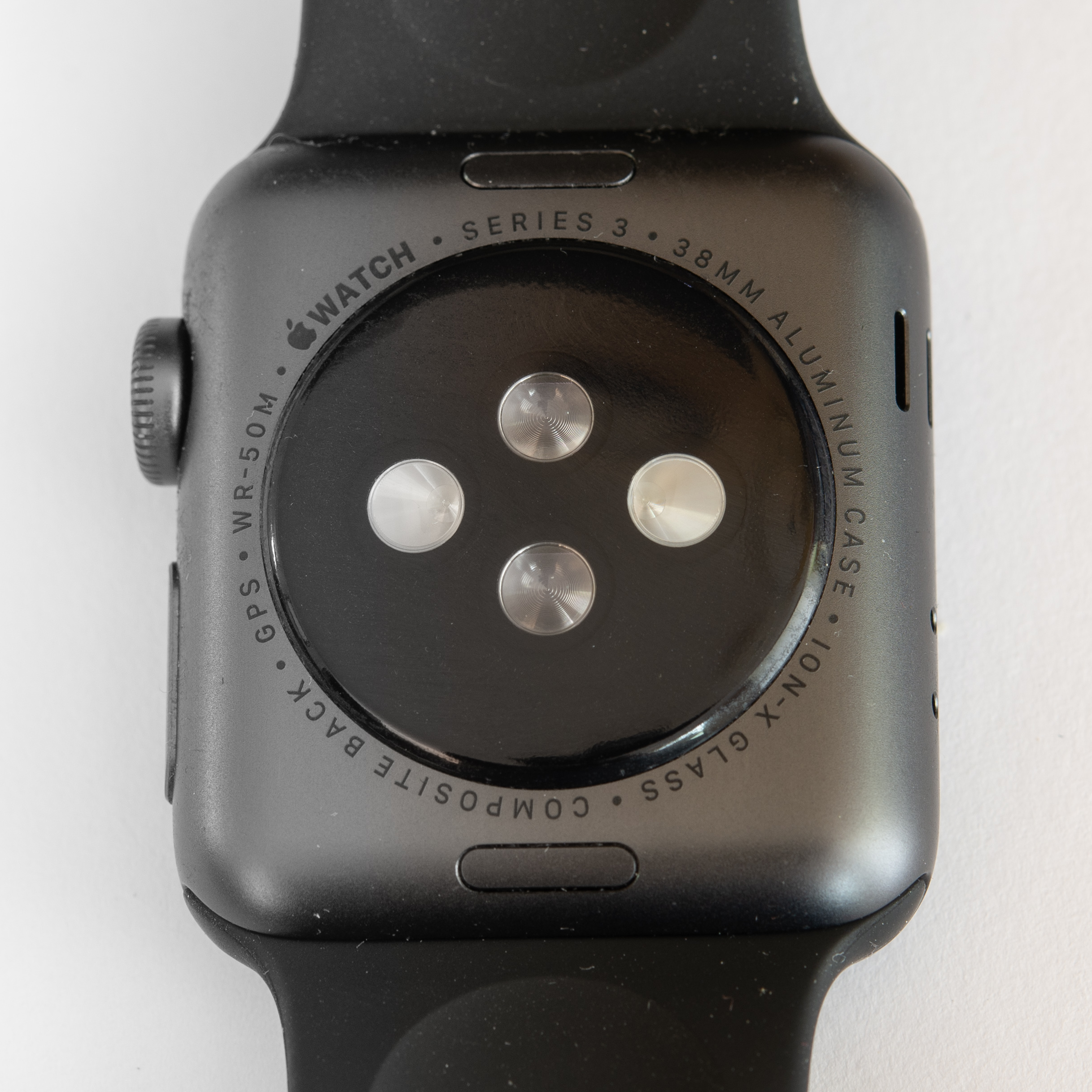
Keeping a food diary can turn lunch into paperwork. Remembering the dressing, the portion size and the snack afterward takes effort. Researchers have found that the pulse signal recorded by a smartwatch contains information related to meals, raising the possibility that a watch could help fill gaps in brief food descriptions.
The green light beneath an Apple Watch helps measure changes in blood volume near the skin. This technique, called photoplethysmography, captures more than the number of heartbeats per minute. Apple researcher Kyle Verrier, the paper’s corresponding author, and his colleagues investigated whether patterns in those recordings could add useful information about eating.
The team worked with more than 1.1 million meal descriptions from 19,340 participants in the Apple Heart & Movement Study. They connected a model trained to interpret pulse recordings with a language model that could process food descriptions. Tests used people whose meal logs had been held out of model training.
One task was to distinguish days when people recorded more calories than their personal average from days when they recorded less. Adding pulse information to meal descriptions raised a statistical score called AUC from 0.74 to 0.82, on a scale where 0.5 represents chance and 1 represents perfect separation. That score concerns the two categories of days; it does not measure how accurately a watch counts calories.
The practical prospect was a less demanding food diary. When the researchers removed half the words from meal descriptions, the combined model still outperformed the model using complete descriptions alone. They also used another language model to shorten entries to keywords, turning a description such as pancakes with blueberries into simply pancakes. Pulse data plus these condensed descriptions slightly outperformed full text alone. Whether people would actually find such logging easier remains to be tested.
A separate study asked whether the approach could predict changes in fullness. For 140 participants eating 720 meals at a dining facility, lunch orders were logged automatically and participants rated their fullness afterward. Without retraining, the combined model achieved an AUC of 0.71, compared with 0.64 for text alone. These were weekday lunches in one controlled setting, and fullness was reported by the participants themselves.
The wrist signal did not reliably reveal exactly what someone had eaten. In a stricter test involving alternatives from the same person’s meal history, choosing the single correct meal did not significantly outperform a control using mismatched pulse recordings. The authors describe the useful role as “augmenting coarse text-based dietary logging rather than replacing it.”
There are also limits to what the signal reveals about digestion. The main analysis used recordings taken within four hours before or after a logged meal, and many came before eating. Tests with recordings from the same person at similar times supported a meal-related contribution, but activity, stress and inaccurate meal timestamps could still matter. The study did not establish a specific physiological mechanism.
The main study relied on self-reported food logs from U.S. Apple Watch users. No trial showed that feedback from the model improved weight, blood sugar or other health outcomes. All five authors are Apple employees and shareholders, and three are named inventors on a related provisional patent application. The accepted paper is available as an Article in Press, ahead of its final edited version.
The research
Wrist photoplethysmography encodes dietary information ↗
Kyle Verrier, Achille Nazaret, Joseph Futoma, Andrew C. Miller and Guillermo Sapiro
npj Digital Medicine · Accepted
DOI: 10.1038/s41746-026-03425-4