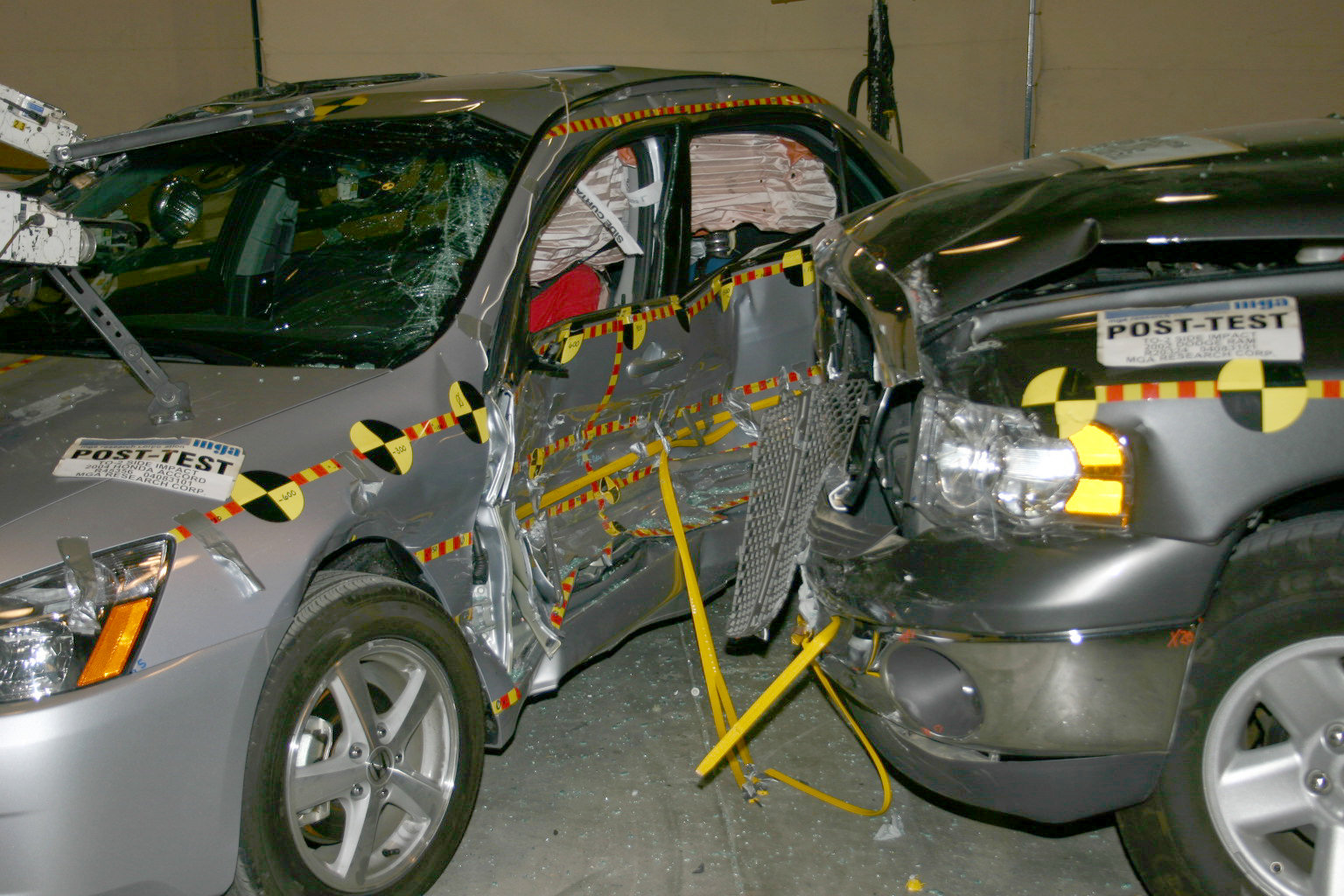
When a self-driving car can’t avoid hitting another car, it may still have time to make the crash less dangerous. A new model uses clues from just before impact to estimate the risk of serious injury. The goal is to help the car choose the move least likely to hurt the people inside.
The model uses the cars’ closing speed, or how fast they’re coming together. It also accounts for each vehicle’s mass, how the cars line up at impact and how easily their bodies bend. Those clues let the researchers estimate the danger without running a detailed computer simulation of the crash itself. Giulio Vichi of the University of Florence in Italy and colleagues described the model November 20 in Scientific Reports.
The team built its best model for serious injuries using U.S. crash records. In French and international crash records, the model still tended to give higher risk scores to cars in which someone was seriously injured. The records covered crashes between two cars that hurt at least one person.
On the road, a car’s computer “operates with partial information,” the authors write. Using data from a 1999 crash test, the model put the risk of serious injury at about 9 percent when the team knew how stiff the other car’s side was. The predicted risk fell to about 8 percent when the team inferred that detail from the car’s size and type. Whether the model can handle such gaps across a wide range of crashes, and whether cars using it would reduce injuries on the road, remains to be tested.
Carmaker Stellantis helped fund the work and reviewed and approved the paper before it was submitted. Three of the authors work for the company.
The research
Giulio Vichi, Michelangelo-Santo Gulino, Anita Fiorentino, Cyril Chauvel, Laura Bigi, Sophie Cuny and Dario Vangi
Scientific Reports · Accepted
DOI: 10.1038/s41598-026-81013-y