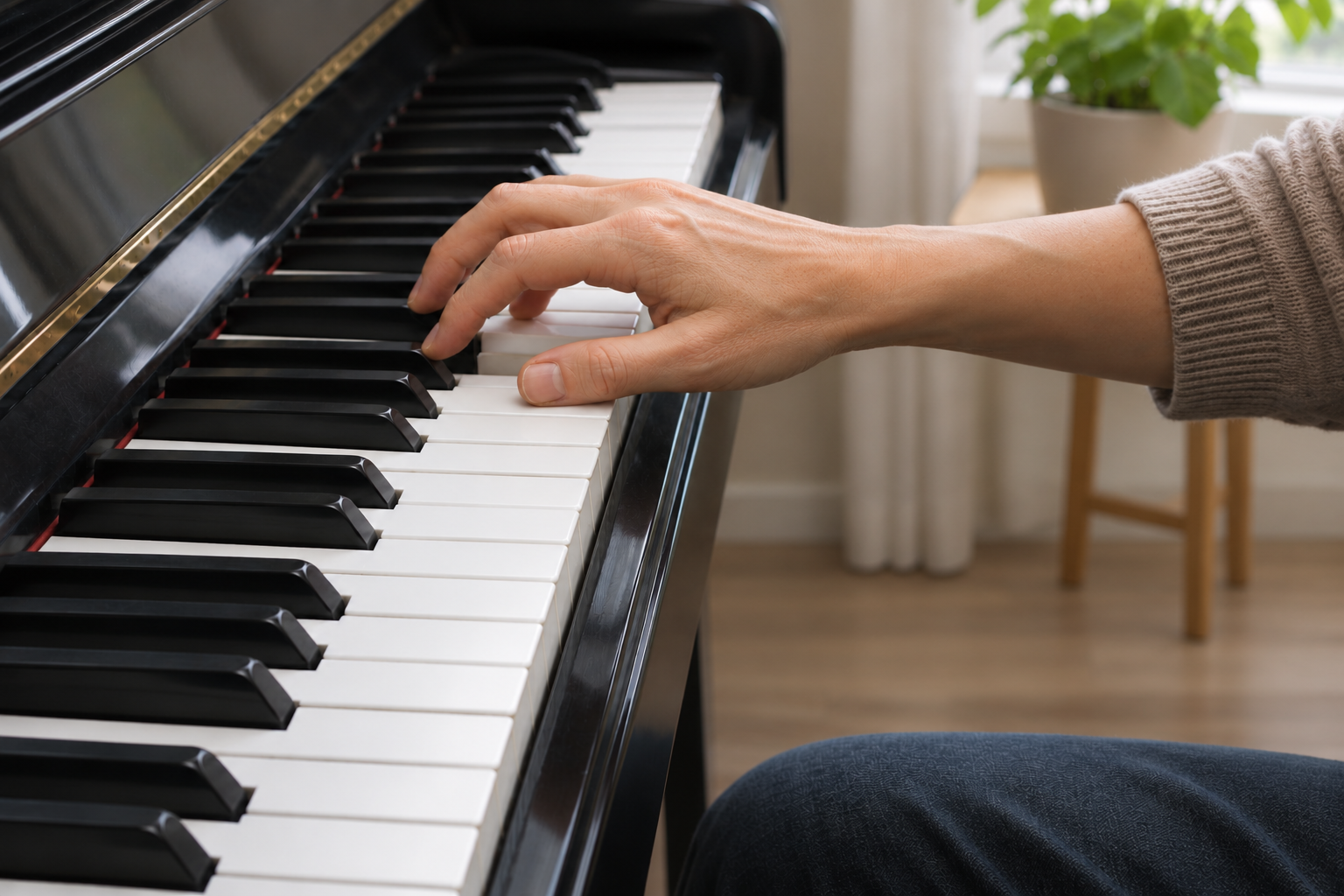
Getting used to a new computer mouse or tennis racket can happen quickly. Making the adjustment last may take much longer. In a laboratory study, repeated practice strengthened a movement memory that remained measurable after more than three months without training.
David Franklin, who studies how people control movement at the Technical University of Munich in Germany, and his colleagues tested 28 healthy young adults. Participants moved a robotic handle toward a target while the device pushed their hand sideways.
They learned to resist the disturbance during their first visit. Across eight training sessions, however, thousands of repetitions brought further improvements. Their compensating forces became more precise, and more of the learned response carried over between visits.
When participants returned after 15 weeks without practicing, they still produced about 60% of their previously learned force pattern. Researchers measured this before exposing them to the original sideways disturbance again, separating retained learning from rapid readjustment.
The untrained left hand showed little benefit from the right hand’s extensive practice.
The study, published in Nature Human Behaviour, suggests that brief laboratory tests can miss changes that unfold over prolonged practice. It examined one tightly controlled movement in young, right-handed adults, so it cannot prescribe a training schedule for tennis, computer use or rehabilitation. Still, the results show that getting the hang of a movement and making it last can follow different timelines.
The research
Long-term development of a motor memory ↗
David W. Franklin, Pascal Nietschmann and Sae Franklin
Nature Human Behaviour · Published
DOI: 10.1038/s41562-026-02622-1