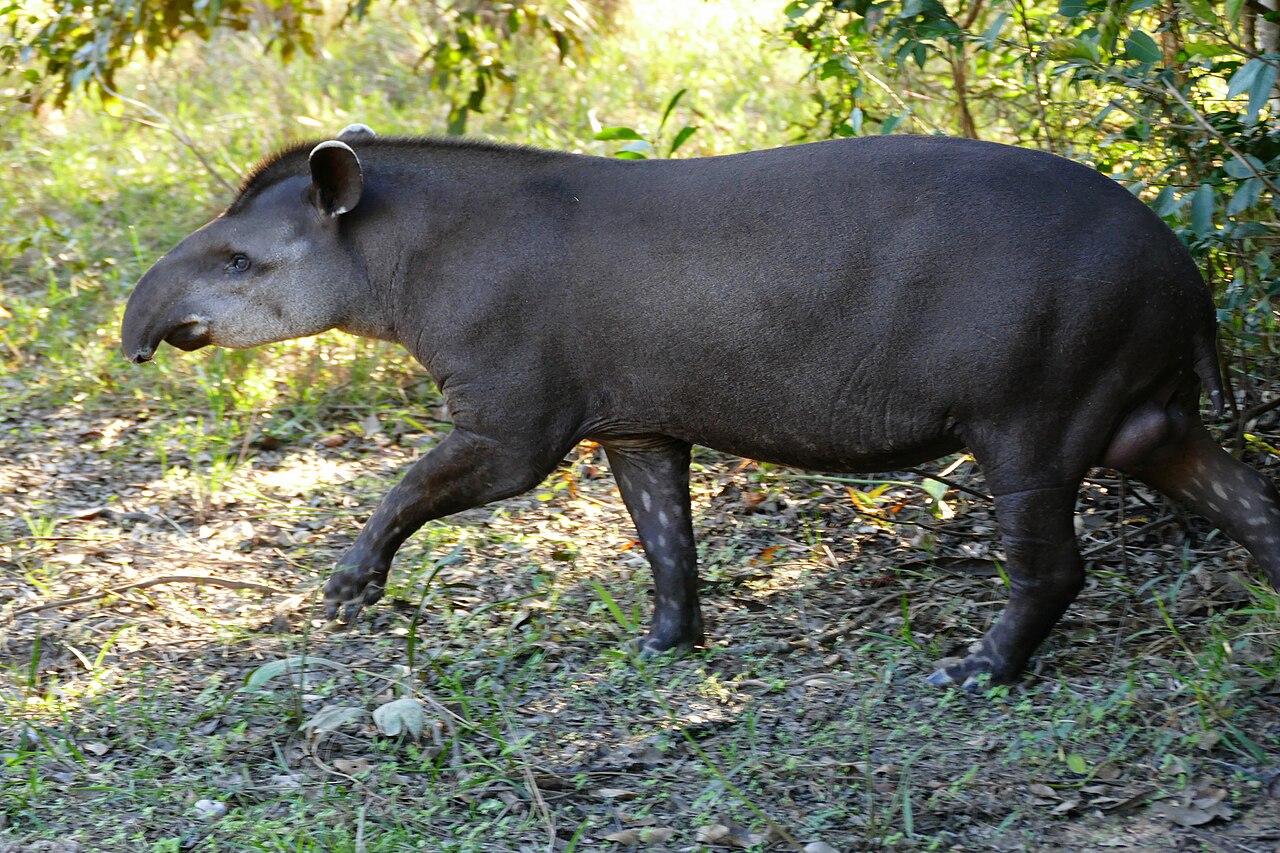
In Brazil, wild tapirs and giant anteaters whose ranges lay closer to waste sites tended to have more tiny plastic particles in their blood than animals that stayed farther away.
Wildlife researcher Marcia Ferraz of LMU Munich and the University of British Columbia’s Okanagan campus and quantitative ecologist Michael Noonan of UBC Okanagan led the international team. The researchers found microplastics in blood samples from 25 of 26 lowland tapirs and 18 of 21 giant anteaters. They had enough GPS data to map the ranges of 40 animals. Those that roamed closer to built-up areas or waste facilities tended to have higher concentrations.
“This is one of the first studies to link what's inside a wild animal's body to where that animal lives and travels,” Noonan said in an LMU Munich news release.
Even in the Pantanal wetlands, the team found microplastics in every animal it sampled, though they lived about 70 miles or more from the nearest waste site. Wind and water can carry microplastics long distances, but the researchers couldn’t tell where the particles in these animals came from or whether they harmed them.
The research
Human land use drives microplastic abundance in terrestrial wildlife ↗
Marcia de Almeida Monteiro Melo Ferraz, Arnaud L. J. Desbiez, Mario Henrique Alves, Justin M. Calabrese, Alexandra Tiso Cumerlato, Fernanda Cristina Jacoby, Nicole Grechi, Danilo Kluyber, Erika Y. Lin, Marcella Pecora Milazzotto, Grazielle Soresini, Emília Patrícia Medici, Gabriela Mastromonaco and Michael J. Noonan
Nature · Published
DOI: 10.1038/s41586-026-11285-x