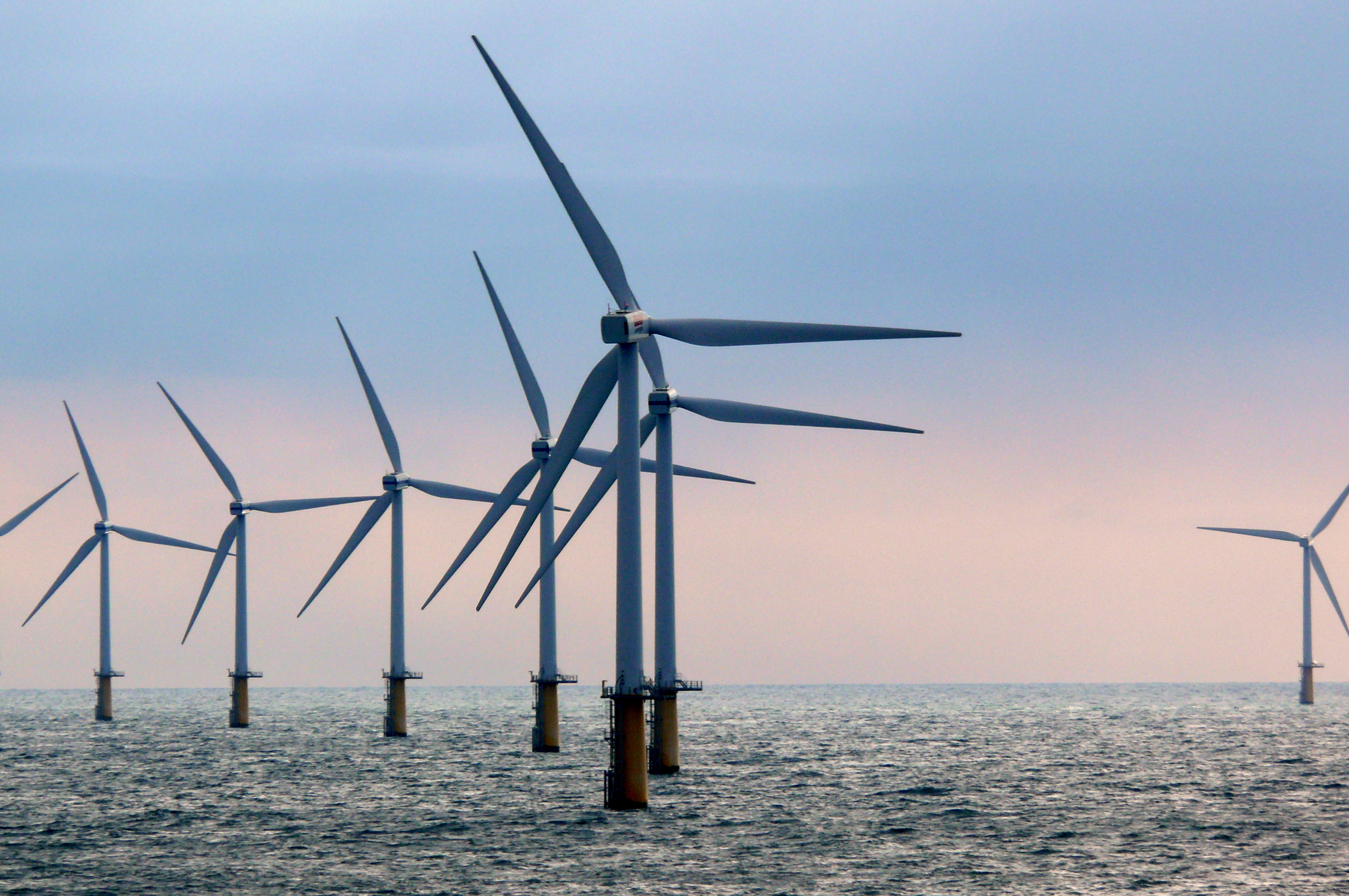
Low clouds could help an offshore wind farm generate more electricity when another farm lies upwind. In computer simulations, wind regained speed sooner after passing through a farm under low clouds. A separate set of simulations showed that turbines could also thin the clouds above them.
“Whether it’s a cloudy day or a clear sky doesn’t just matter for solar panels,” Richard Stevens, a fluid dynamicist at the University of Twente in the Netherlands, said in a university statement. Turbines take energy from moving air, leaving a wake of slower wind. If that wake reaches another wind farm, it can cut the amount of electricity the second farm produces.
For a September study in PRX Energy, Stevens and colleague Davide Selvatici simulated a wind farm beneath a deck of low clouds. As the cloud tops lost heat, the cooled air sank and stirred the air below, bringing faster wind down to turbine height. The wind in the wake got back to 90 percent of its incoming speed in roughly half the distance it took when the researchers switched off cloud-top cooling.
The pair and colleague Thijs van den Ham reported in a Nov. 17 study in the Journal of Renewable and Sustainable Energy that the simulated turbines could also stir warmer, drier air into low clouds, causing droplets to evaporate downwind. That effect was strongest when the bottom of the cloud was near the tips of the blades and the cloud held little water. The thinning resembled gaps in cloud cover seen in satellite images near clusters of wind farms in the North Sea.
Measurements at sea would help establish how much cloud cover changes the output of real wind farms. Accounting for clouds in forecasts could help planners estimate how much electricity neighboring farms can generate.
The research
Davide Selvatici, Thijs van den Ham and Richard J. A. M. Stevens
Journal of Renewable and Sustainable Energy · Published
DOI: 10.1063/5.0335586