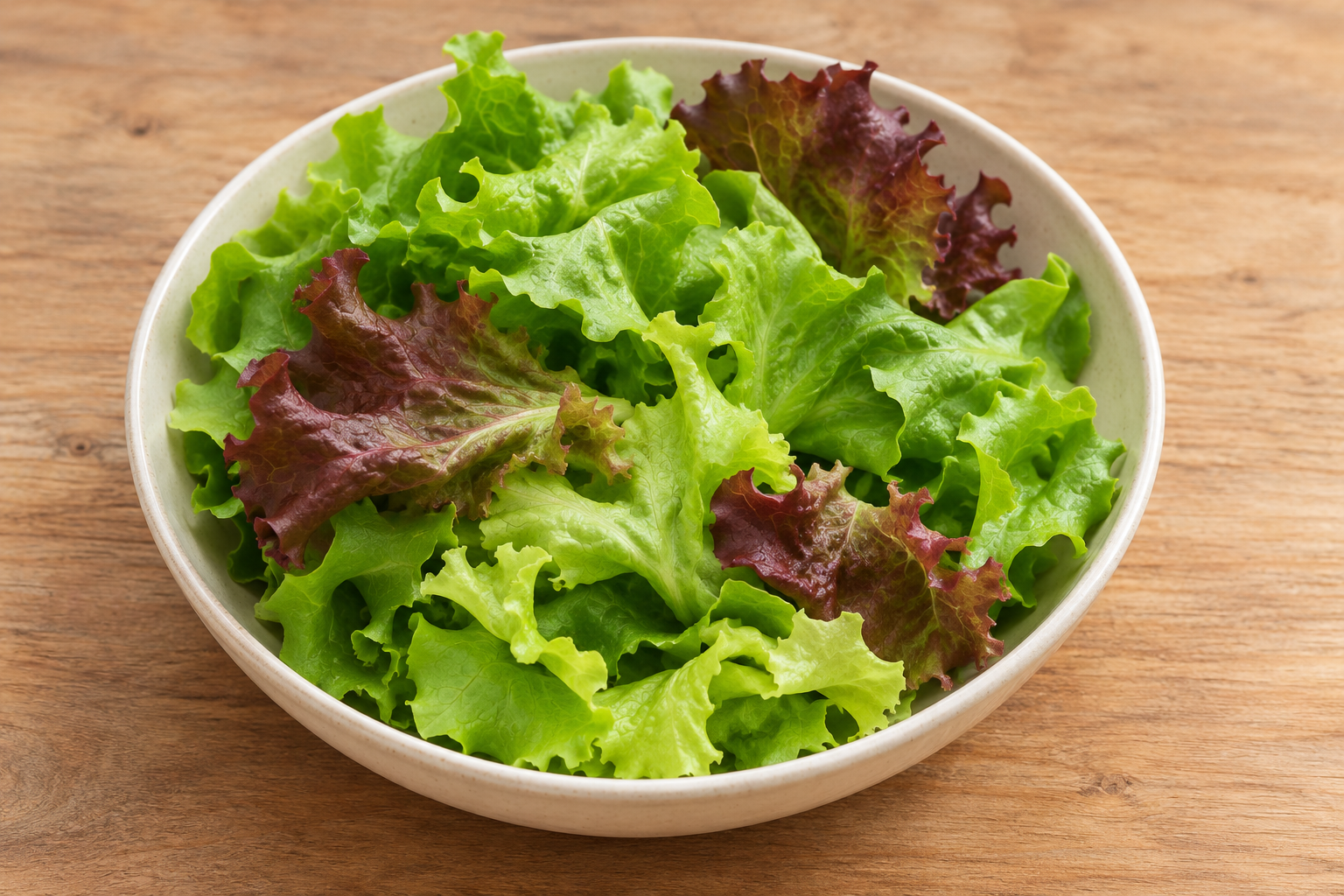
A lettuce leaf can look much the same in February and August. The bacteria and fungi on its surface may tell a different story. Compared with December through June, samples collected from July through November contained a wider variety of seasonal fungi and bacteria. The biggest difference was among fungi: researchers identified nearly three times as many fungal types associated with the later period on green lettuce, and more than twice as many on red lettuce.
Eun-Jin Park, a food-safety researcher with Jeju National University, and Min-Soo Kim, a microbiologist with Chungnam National University, work in South Korea. They and their coauthors collected 143 lettuce samples from six grocery stores in Daejeon, South Korea, over a year. They grew bacteria and fungi from the leaves in the lab and read short stretches of microbial DNA to distinguish different types. On green lettuce, for example, 2,184 fungal DNA variants were associated with July through November, compared with 756 for December through June. Other microbes persisted across both periods. Many of the fungal groups that became more prominent in the later months were decomposers, which break down dead organic matter.
The team also compared the lettuce samples with gut microbiome data from 13 earlier studies. Some of the same broad groups of microbes turned up in both. But the researchers didn’t know what lettuce those people had eaten, and the DNA comparisons weren’t fine-grained enough to establish that the same strains were present. The study couldn’t show whether microbes from a particular salad reached the gut, stayed there, or affected anyone’s health.
The lettuce came from one city over one year and was sampled before consumers washed it. Where the lettuce was grown, when it was harvested, and how it was shipped or stored could also have influenced which microbes were on the leaves at the store.
The research
Seasonal dynamics in lettuce phyllosphere microbiota and potential transfer to the human gut ↗
Su-A In, Ji-Woo Park, Yeo-Eun Yun, Ye-Eun Lee, Eun-Jin Park and Min-Soo Kim
npj Science of Food · Accepted
DOI: 10.1038/s41538-026-01228-1