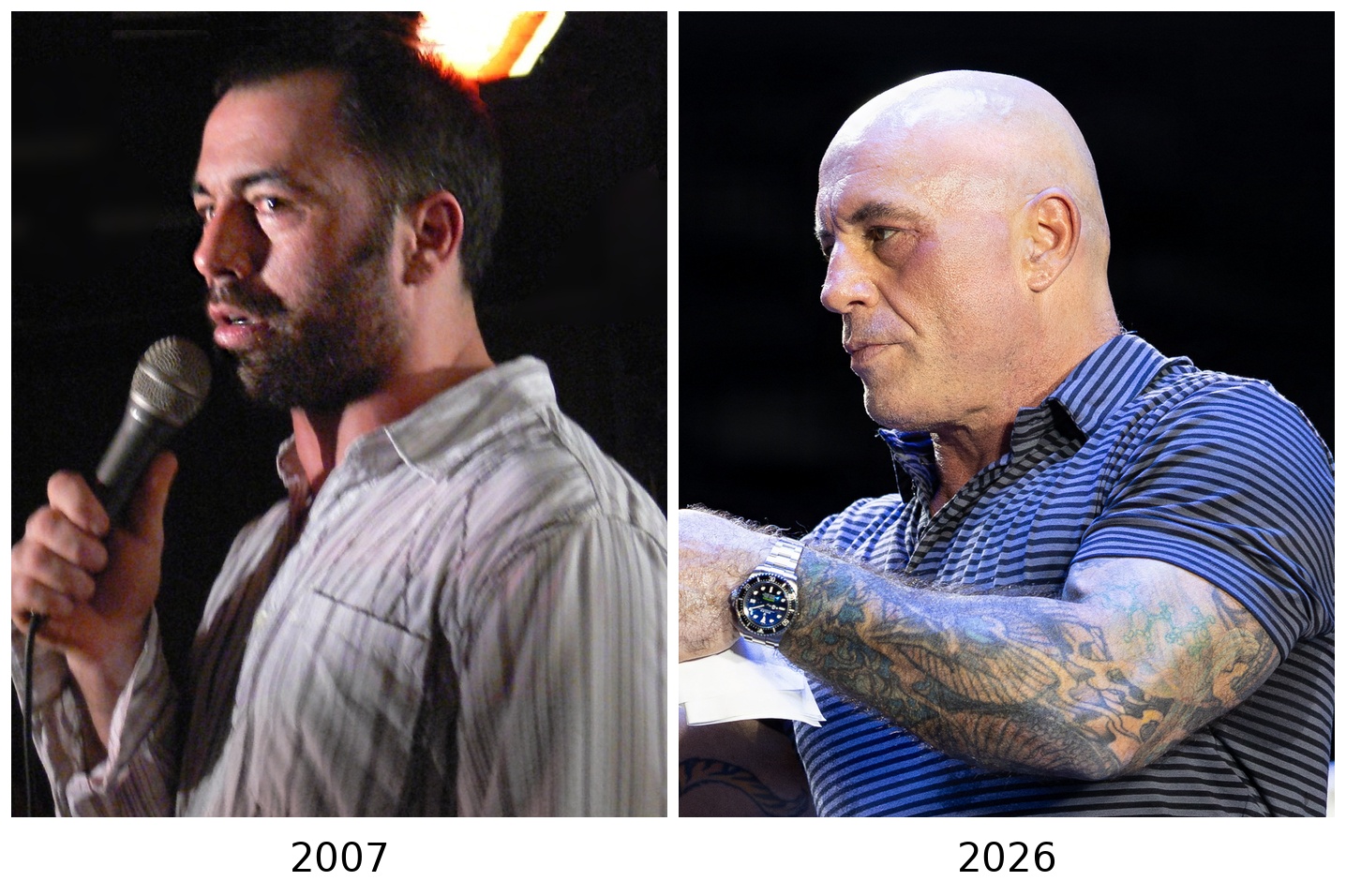
Joe Rogan’s podcast has made more room for politics without leaving everyday conversation behind. An analysis spanning 15 years finds that elections, foreign policy and free speech increasingly joined the show’s mix of comedy, fitness and personal stories, especially after 2016.
Huma Rasheed, a researcher in media and computational methods at the University of South Florida, and coauthors analyzed nearly 95% of regular episodes aired from December 2009 through December 2024. Their findings appear November 18 in Mass Communication and Society.
Computer models grouped patterns of words into topics, then mapped connections among them. Six broad themes emerged. Political and social topics grew more prominent, while comedy and entertainment declined as a share of the conversation. Talk about stand-up comedy remained relatively steady; sexual and crude humor fell.
Personal stories remained the connecting thread, bridging otherwise distant subjects. That conversational setting could bring political ideas to listeners who arrived for something else.
“When politics is embedded in everyday talk, people may encounter political ideas and perspectives they wouldn’t otherwise seek out,” coauthor Dannagal Young, a communication and politics researcher at the University of Delaware, said in an Annenberg Public Policy Center statement.
A separate survey of 1,600 U.S. adults in early 2025 found that Rogan listeners were more likely to report voting for Donald Trump in 2024, even after accounting for party affiliation, political interest, past voting and other factors.
That association does not show that Rogan persuaded anyone to vote for Trump. People choose programs that suit their existing views, and the survey measured listening after the election. The content analysis also identifies subjects, rather than testing whether particular claims were accurate or persuasive.
The study documents where political conversation is happening. Establishing what that conversation changes will require following listeners over time or testing the effects of exposure.
The research
Huma Rasheed, Liam Cuddy, Brooke Molokach, Jiwon Nam, Scarlett Feuerstein, R. Lance Holbert and Dannagal G. Young
Mass Communication and Society · Published
DOI: 10.1080/15205436.2026.2758779