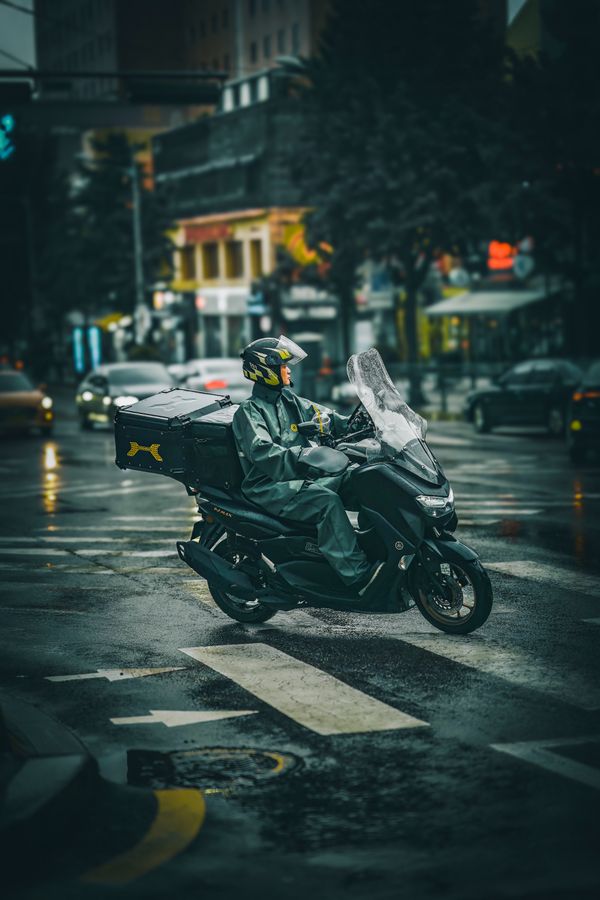
Motorcycle food-delivery riders in South Korea slept less after longer shifts. The shorter the night’s sleep, the more tired riders tended to feel by the end of their next shift.
“Long working hours consistently correlate with higher fatigue levels in various occupational settings,” the authors write in a study posted Nov. 21 in BMC Public Health. They point to research on drowsiness among heavy-vehicle drivers and compare the riders’ estimated alertness with results from a separate study of emergency physicians.
A courier’s workday can stretch or shrink with the weather, the flow of orders or the need to earn more. Fatigue can slow a rider’s reactions in traffic, but earlier studies rarely followed the same riders from one day to the next. Sookyung Kim, a nursing researcher at Soonchunhyang University in South Korea, and coauthors set out to see whether a short night might help explain how fatigue carries over.
For two weeks, 55 riders in two South Korean cities wore wrist monitors to estimate their sleep and rated how tired they felt before and after each shift. They averaged nearly 11 hours of work per workday and about 5½ hours of sleep per night. In the researchers’ model, an extra hour of work was associated with about 4 fewer minutes of sleep on shifts shorter than 12 hours and about 12 fewer minutes for each hour beyond that.
The study points to a range of shift lengths where the link may get stronger. It can’t establish a precise cutoff or show that shorter sleep caused the next day’s fatigue. The team didn’t measure crashes or test ways to prevent them.
The authors suggest that delivery apps could eventually use “fatigue alerts, rest prompts, or other algorithmic nudges” after long stretches of work. They say any such prompts would need testing to see whether they improve alertness and make riders safer.
The research
Ari Min, Chang Gi Park and Sookyung Kim
BMC Public Health · Accepted
DOI: 10.1186/s12889-026-30229-8