A walking dog plants its feet beneath its body. A tegu lizard splays its legs out to the sides. Mammals’ predecessors took more than 100 million years to make the shift from a sprawl to walking with legs beneath the body. Some went back to a wider stance along the way, new computer simulations suggest.
Paleontologist Peter Bishop of Harvard’s Museum of Comparative Zoology and colleagues built models of the skeletons and muscles of 4 extinct species. Fossil bones, including the places where muscles once attached, helped guide the reconstructions. The team simulated level walking, looking for motions that limited muscle effort and let the feet clear the ground between steps. The approach reproduced many features of the way a living tegu and a Virginia opossum walk, the researchers report November 27 in Science Advances.
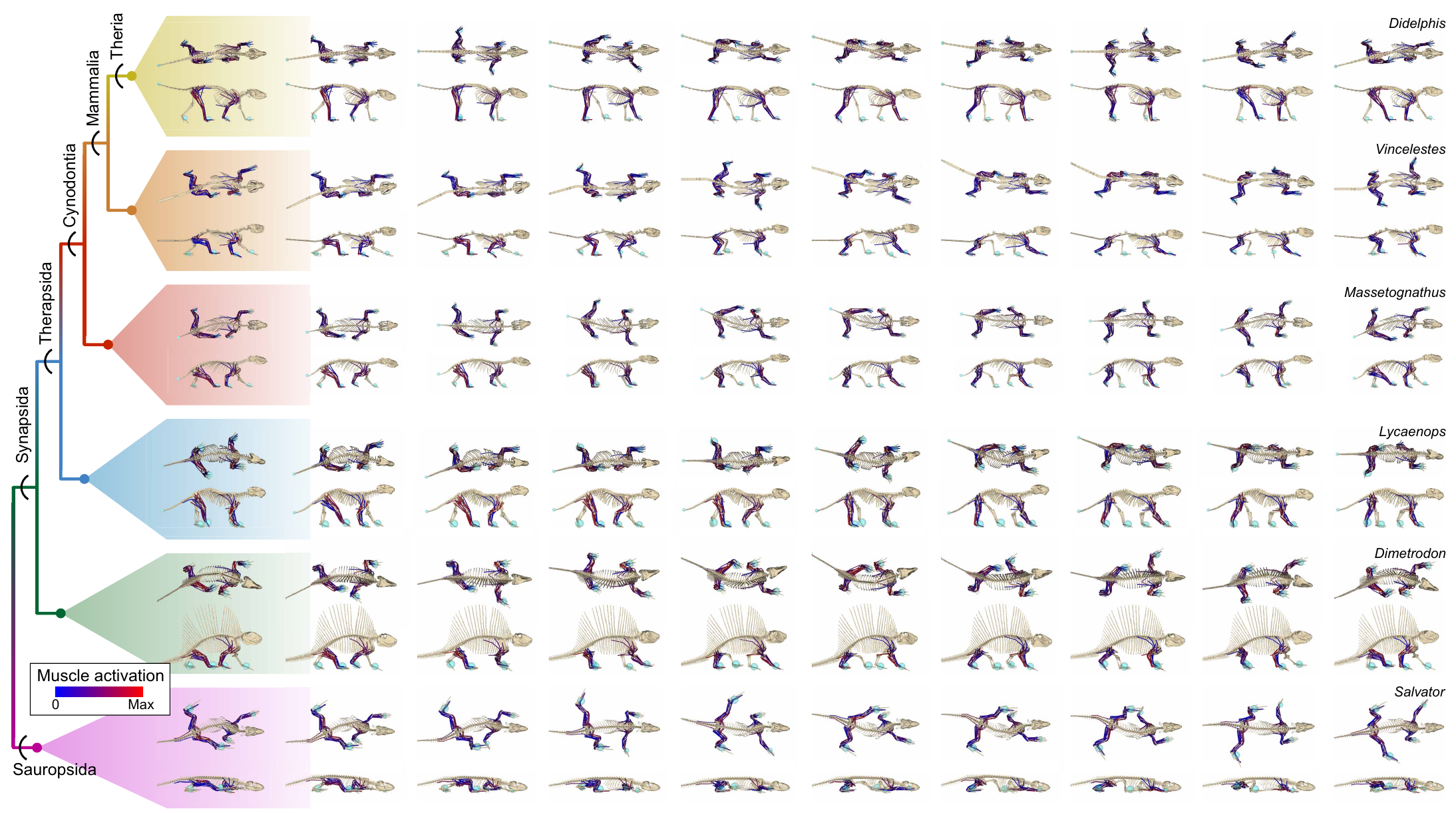
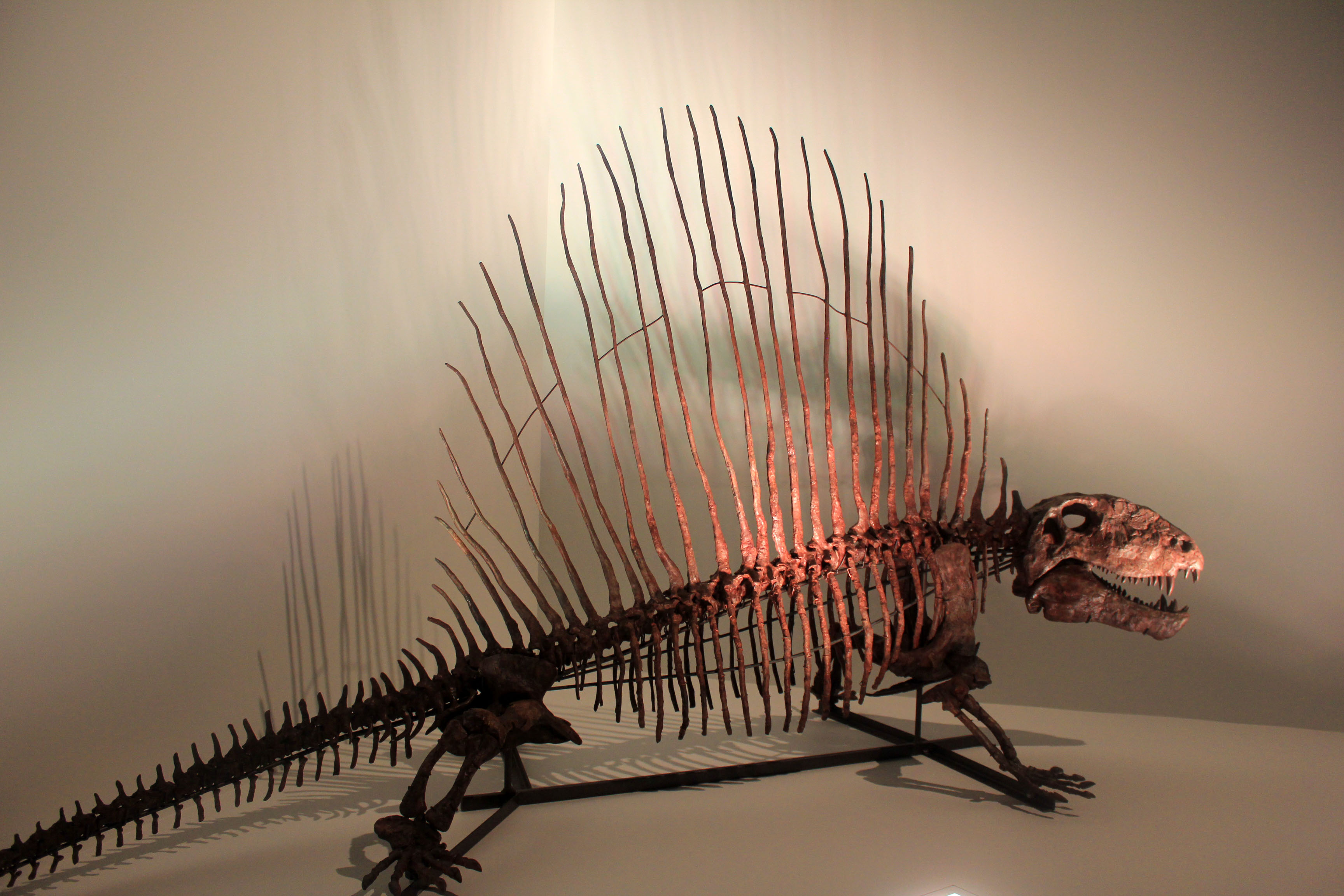
The simulations showed the sail-backed Dimetrodon sprawled about 290 million years ago. About 30 million years later, the saber-toothed Lycaenops held its legs closer beneath its body. Two later species, the roughly 236-million-year-old mammal relative Massetognathus and the 129-million-year-old early mammal Vincelestes, splayed their legs farther out again in the simulations.
Paleontologists had proposed that some of these animals might have walked with front legs splayed out and hind legs held under their bodies. When the team forced that combination in simulations, the modeled muscles had to work harder, particularly in Dimetrodon and Lycaenops. The results suggest front and back legs tended to shift posture together, even as different parts of the skeleton evolved at different rates.
The fossils leave room for several ways to reconstruct the animals’ muscles, so the researchers tested more than one version for each extinct species. “The question remains as to what circumstances drove this reversal,” the authors write. They suggest that some changes to the limbs might have helped the animals dig or climb, with little immediate effect on how they walked.
The research
Whole-animal functional integration shaped the evolution of mammalian stance and gait ↗
Peter J. Bishop, Richard W. Blob and Stephanie E. Pierce
Science Advances · Published
DOI: 10.1126/sciadv.aeg4662