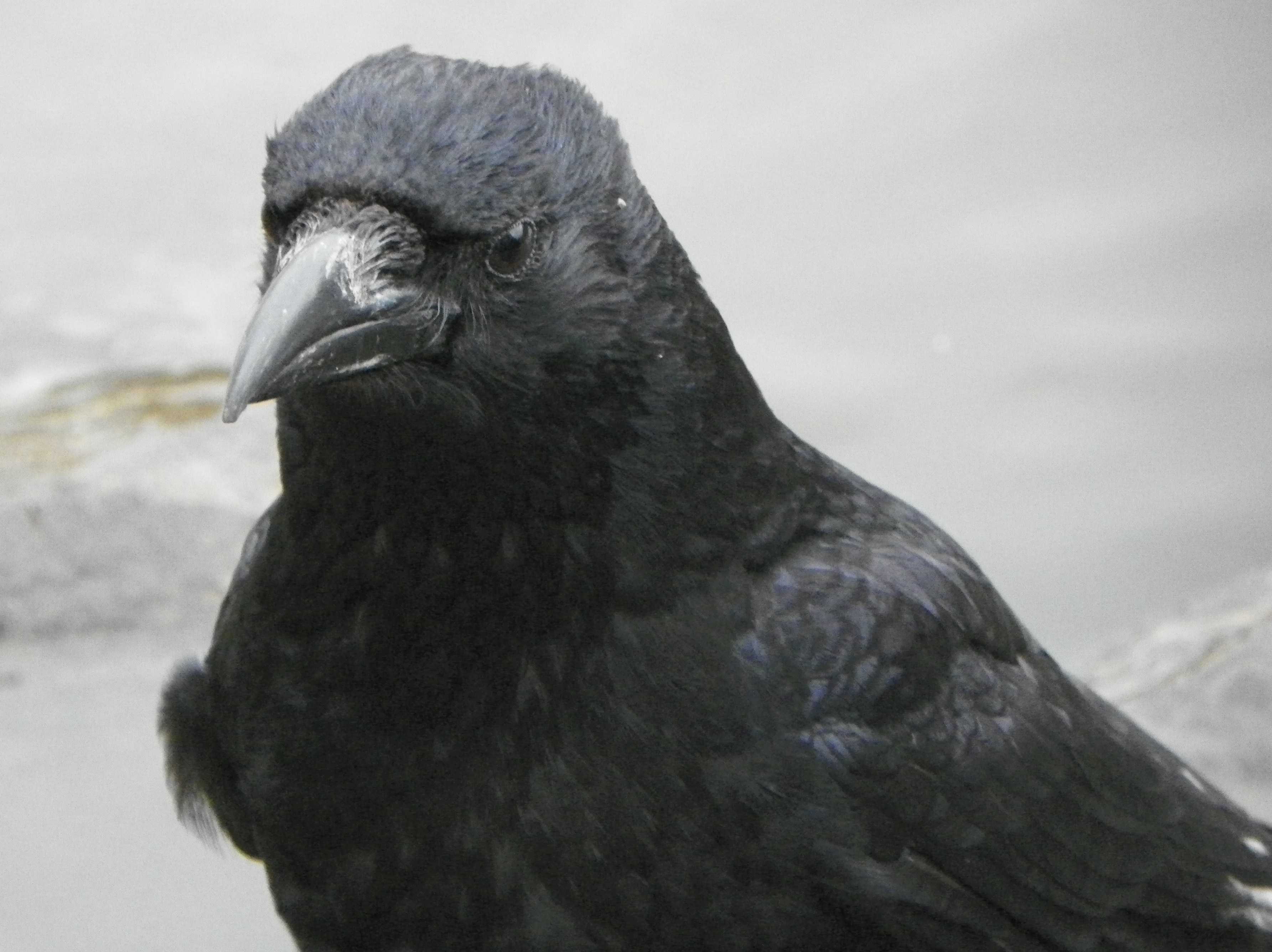
Carrion crows let a researcher come about 11 feet (3.5 meters) closer when she walked toward them with her head and eyes down. Looking down with only her eyes made little difference to when the birds took off, a field study in England found.
The researchers wanted to know what a feeding crow pays attention to when deciding whether to stay put or fly away. Understanding how crows respond to people could help us be less disturbing to city birds, the authors say.
Katy Ablett and Edward R. Morrison of the University of Portsmouth report the findings November 20 in Behavioral Ecology and Sociobiology. In parks and along the coast near Portsmouth, Ablett approached crows searching for food alone on the ground. She walked slightly to one side of each bird and either looked straight at it, kept her head pointed toward it while looking down, or lowered both her head and her eyes. When the crow took off, she marked where she was standing and measured the distance to the spot where it had been feeding.
With Ablett’s head pointed toward them, the crows took off when she was about 40 feet away on average. With her head down, they let her come within about 29 feet. The direction the birds were facing also mattered. Crows that started out facing her took off sooner than those facing away. The team couldn’t identify the wild crows individually, so some birds may have been counted more than once.
“Head orientation in general may be a more noticeable cue than gaze alone,” the researchers write. They suggest that a head turn could be a simple clue to where a potential predator is looking, since many predators have eyes that face forward.
The research
Carrion crows are sensitive to human head, but not eye, orientation ↗
Katy Ablett and Edward R. Morrison
Behavioral Ecology and Sociobiology · Published
DOI: 10.1007/s00265-026-03826-1