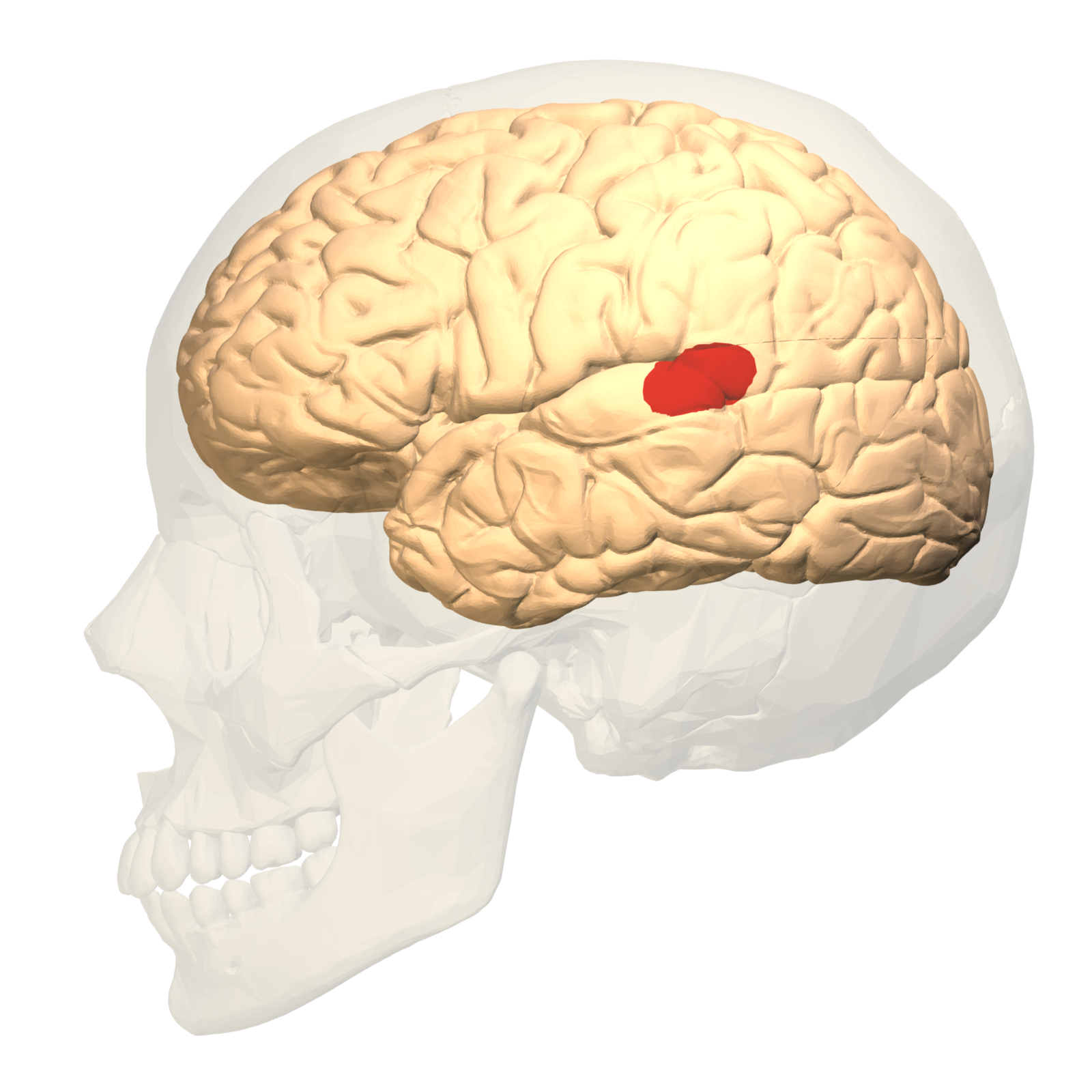
Damage to a part of the brain that helps us understand speech can also make it hard to get words out. Now researchers have found a clue to why. Activity in a small patch of that region peaks about a quarter of a second before we say a word and carries information about the word we’re about to say.
The patch sits within Wernicke’s area. Its signals reflect how long an upcoming word takes to say and how common it is in English. Edward Chang, a neurosurgeon at the University of California, San Francisco, led the team reporting the findings November 19 in Science.
The researchers recorded brain activity in 28 people undergoing treatment for epilepsy. Separate experiments tested what happened when electrical stimulation briefly disrupted the region: Participants could struggle to start a word or mix up its sounds, then say it correctly after stimulation stopped. An analysis of 313 people who underwent brain surgery also linked damage in this region to speech errors.
“Instead of being separate systems, the processes of hearing speech and actually speaking are very intertwined,” Chang said in a university news release.
The findings identify a step in preparing words for speech, rather than a single source of thoughts or meaning. The relevant tissue’s position varied among individuals, and the recordings came from people receiving clinical brain procedures.
Many speech-restoring brain interfaces draw on regions that control the movements of the mouth and throat. The newly identified signals offer a possible additional route when those movement-related regions are damaged. Because the same small area carries information about both listening and speaking, it could eventually help an interface follow the give-and-take of a conversation.
The research
A neural code for generative speech production in human Wernicke’s area ↗
Alexander B. Silva, Matthew K. Leonard, Patrick W. Hullett, Deborah Levy, Catherine Wang, Duo Xu, Ilina Bhaya-Grossman and Edward F. Chang
Science · Published
DOI: 10.1126/science.aef8963