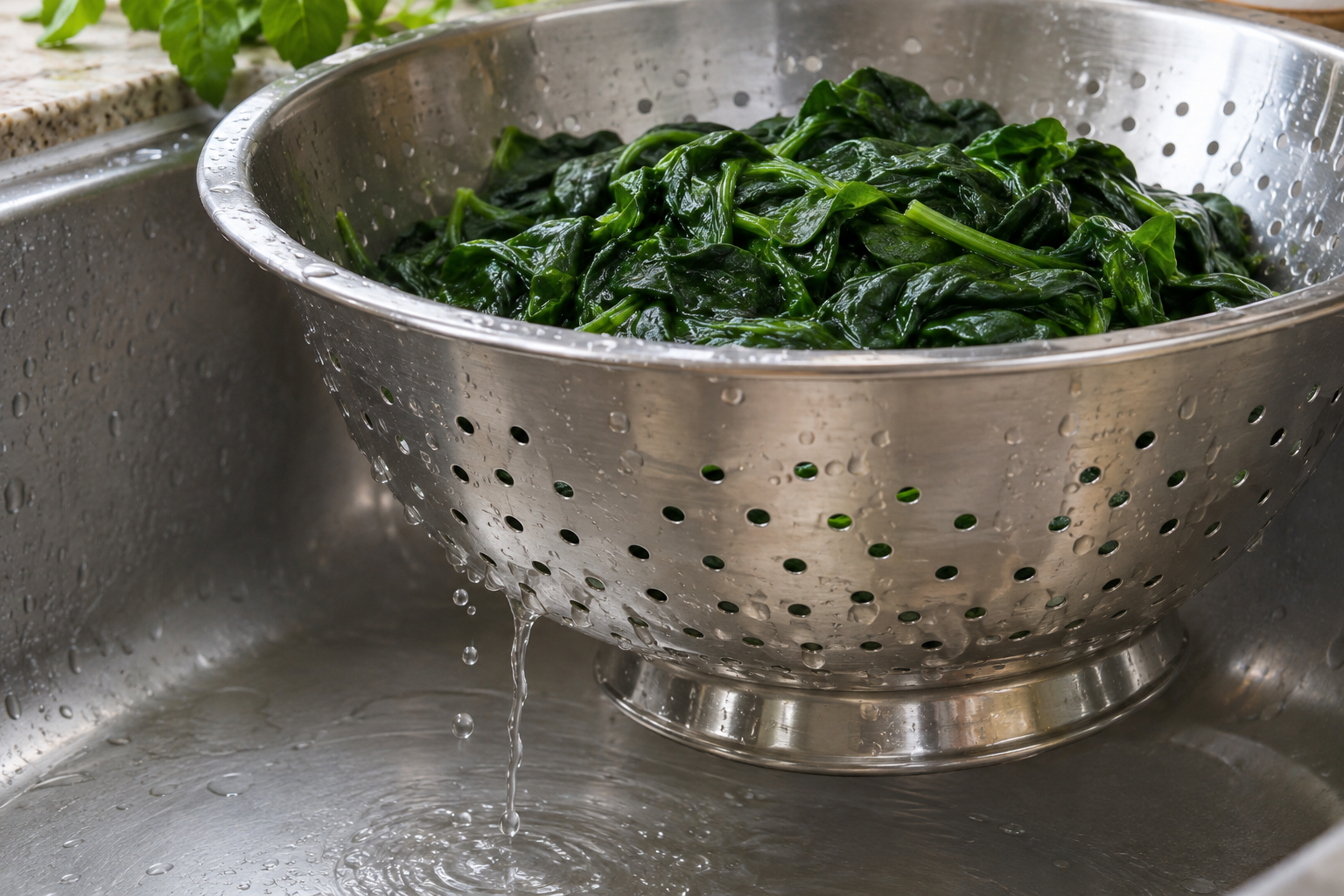
When you drain a pot of boiled spinach, some of its minerals can go down the sink. In one small experiment, boiled and drained spinach contained about 60 percent less potassium per 100 grams than raw spinach. For the same weight, steamed and sautéed spinach contained more potassium than the boiled greens.
Benan Semercioğlu, a nutrition and dietetics researcher at SANKO University in Türkiye, and coauthor Yasemin Beyhan report the results in the International Journal of Food Science and Technology. They wanted to see which cooking methods kept more minerals in the spinach and which might help people who have been advised to limit them.
The pair chopped spinach from a single grower and cooked it four ways. A 100-gram serving, about 3½ ounces, contained roughly 510 milligrams of potassium raw and 205 milligrams after boiling for 20 minutes and draining. Steamed and sautéed spinach had about 360 and 375 milligrams, respectively. Boiling and draining also yielded the lowest levels of sodium and phosphorus per 100 grams.
The researchers suggest that heat damages the walls and membranes of plant cells, letting potassium and sodium dissolve into the cooking water. For cooks who want to keep more of those minerals, “cooking methods that limit water contact, such as sautéing, may be preferable,” the authors write.
The team cooked the spinach just once each way and ran three lab measurements on each sample. The comparison shows what happened under those cooking conditions. The researchers measured minerals in the food, so how the different preparations might affect people on mineral-restricted diets remains an open question.
Spinach boiled in a little water and left undrained had about as much potassium per 100 grams as the steamed spinach.
The research
Effects of Different Cooking Methods on Potassium, Sodium, and Phosphorus Levels in Spinach ↗
Benan Semercioğlu and Yasemin Beyhan
International Journal of Food Science and Technology · Accepted
DOI: 10.1093/ijfood/vvag251