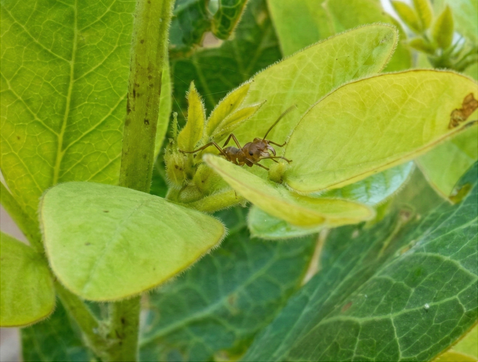
Ants on a plant can act like bodyguards, chasing away insects that eat it. But in a paper in Arthropod-Plant Interactions, researchers report that when they kept ants off a flowering shrub in Brazil, the plants ended up with 29% fewer flowers and about half as many caterpillars as shrubs the ants could still reach.
The shrub, a species of senna, offers ants a sugary drink from glands between its leaflets. Ecologist Iasmim De-Freitas of the University of São Paulo and colleagues wrapped sticky tape around the bases of some shrubs to keep ants from climbing them. They tracked 37 shrubs through one flowering season, counting ants, caterpillars, buds and flowers.
Most of the caterpillars belonged to a single butterfly species. The young caterpillars often fed inside closed flowers, away from the leaves where ants collected nectar. Shrubs with more buds tended to have more caterpillars, suggesting that the extra buds may have offered the caterpillars more places to feed.
The sticky barriers may also have kept other crawling insects off the shrubs. The team counted caterpillars but did not measure how much plant tissue they ate, so fewer caterpillars did not necessarily mean less damage. And although the shrubs with ant access flowered more, there was no clear difference in the number of seeds per pod or how much they weighed in a direct comparison.
The research
Iasmim De-Freitas, Ana Júlia Vicentin, Maria Tristão, Xoaquín Moreira and Kleber Del-Claro
Arthropod-Plant Interactions · Published
DOI: 10.1007/s11829-026-10305-x