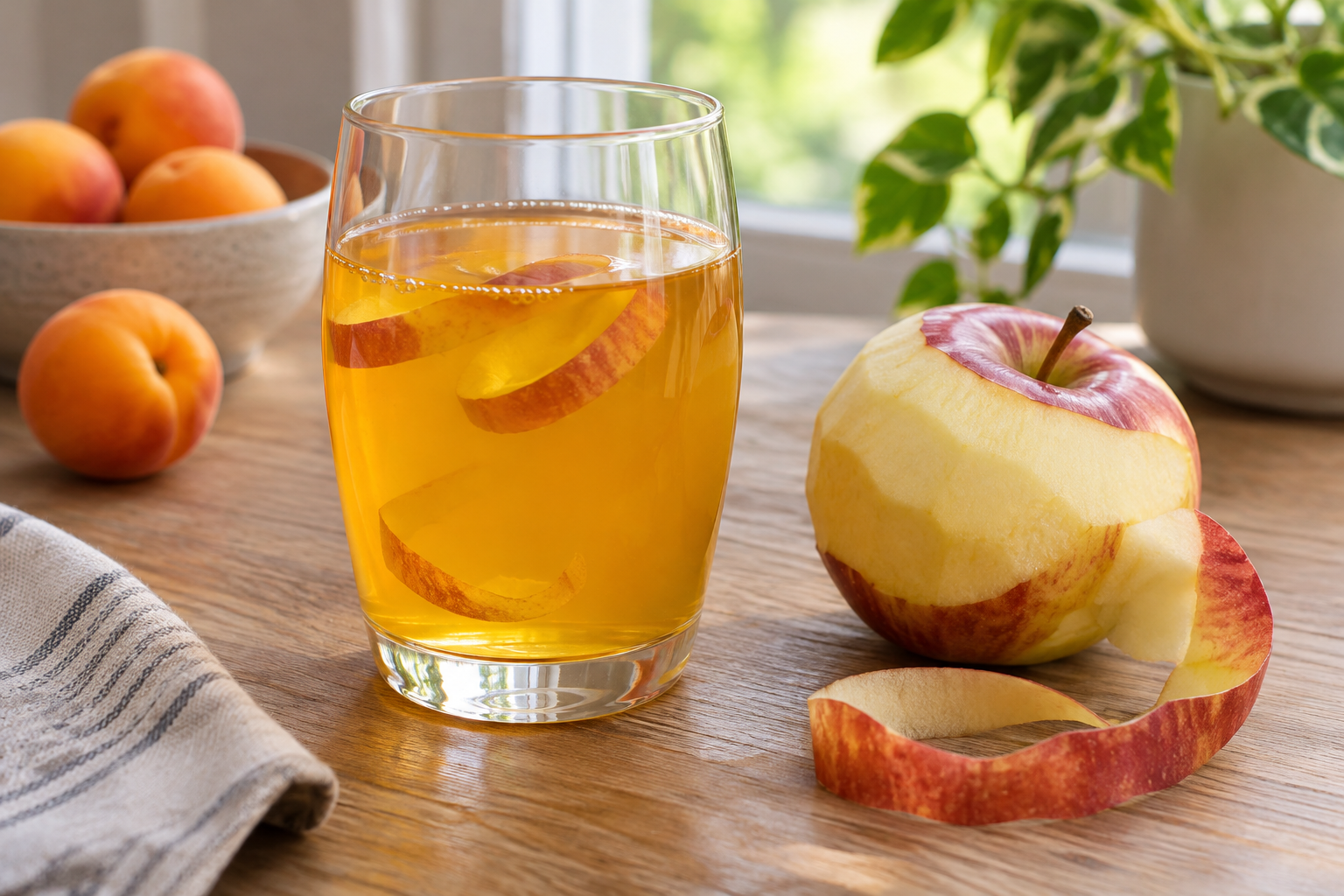
Apple skins left behind after peeling could become an ingredient in apricot squash, a sweetened beverage made from apricot pulp or juice mixed with water. In laboratory tests, apricot squash containing an apple-peel extract earned higher sensory ratings and had lower microbial counts than versions made without the extract.
Raheel Suleman, a food technologist with Bahauddin Zakariya University in Pakistan, and an international team of researchers prepared the sweetened apricot drink with three concentrations of extract: 1.5%, 3% and 4.5%. They compared those formulations with one containing no preservative and another containing 0.1% sodium benzoate, a conventional food preservative. The study has been accepted by the International Journal of Food Science and Technology.
The extract took considerably more preparation than dropping peel into a glass. The researchers blanched apple skins, dried them and ground them into powder. They used ultrasound to help draw compounds out of the powder into an ethanol-and-water mixture, then removed the ethanol under vacuum. The resulting extract went into a mixture of apricot pulp, sugar syrup and citric acid.
A panel of 60 semi-trained postgraduate researchers rated the drinks on a nine-point scale. Samples arrived in numbered cups in shuffled order, with water between tastings. The formulation containing the most extract received the highest reported ratings for taste, aroma, mouthfeel and overall acceptability. These were ratings from a specialized panel, rather than a survey of ordinary shoppers.
Laboratory cultures also yielded fewer microbes as the extract concentration increased. The 4.5% formulation had the lowest total plate count and the lowest combined yeast-and-mold count, below both comparison drinks. Tests of antioxidant activity and measures of total phenolic and flavonoid compounds were also higher in the extract-enriched formulations. Those chemical tests describe what happened in the laboratory; they do not establish health benefits from drinking the squash.
The results point toward a possible use for apple-processing leftovers, but they do not yet establish a practical replacement for commercial preservatives. The researchers did not test long-term shelf life, and the methods do not specify a storage interval for the reported microbial comparisons. Lower counts in these samples cannot tell a manufacturer how long a bottled drink will remain safe or how it will perform against particular foodborne pathogens.
For now, the promising result is a combination of taste and laboratory performance: the peel extract did not have to make this sweet apricot drink less appealing to lower its microbial counts. Turning that finding into a dependable product will require storage and safety testing.
The research
Zeeshan Akbar, Raheel Suleman, Muhammad Muzamil, Muhammad Asad Ali Khan, Muhammad Aftab Zahoor, Isam A. Mohamed Ahmed and Moneera O. Aljobair
International Journal of Food Science and Technology · Accepted
DOI: 10.1093/ijfood/vvag231