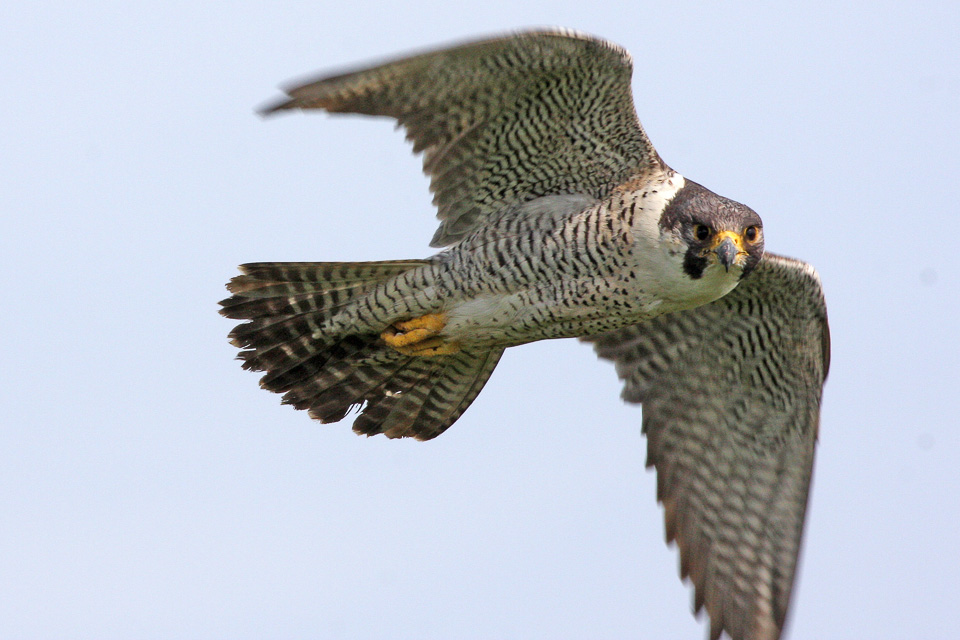
Peregrine falcons make their homes on coastal cliffs and on city buildings, including cathedrals. By late this century, a warmer climate could give the fast-diving birds more places with conditions that suit them in the United Kingdom.
Connor T. Panter, a conservation biologist at the University of Nottingham in England, compared projections for 16 birds of prey that breed in the UK. He used sightings from across Europe to identify the kinds of places each species uses in the breeding season, then asked where similar conditions might occur in the UK as temperatures and rainfall change. The results appear November 26 in Frontiers in Ecology and Evolution.
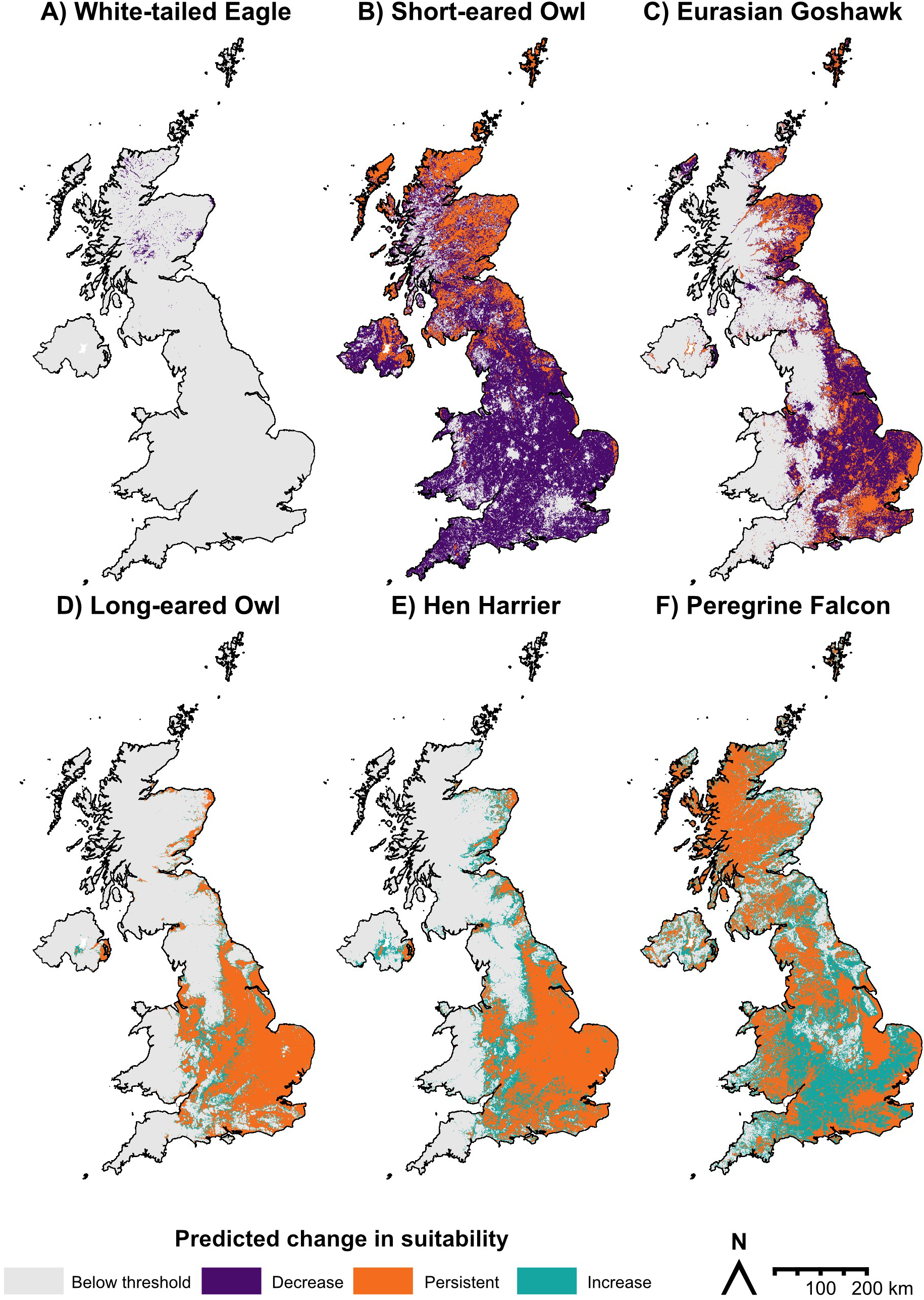
With changes in temperature and rainfall from each of five climate models, Panter projected gains for peregrines under both emissions scenarios. In the high-emissions scenario, the area rated suitable was about 74 percent larger on average in 2061–2080. The model had limited ability to distinguish suitable places from unsuitable ones for peregrines, and Panter held land cover fixed. Whether the birds actually settle in new areas would also depend on prey and places to nest, which the study didn’t model.
Red kites faced a different outlook. In the same high-emissions scenario, their suitable area shrank by about 45 percent on average by late century. The birds have made a comeback in the UK since they were reintroduced.
For birdwatchers, the maps point to places worth watching as the climate changes. A sighting recorded through a project like iNaturalist can help researchers track where birds of prey actually turn up.
“Projected increases in suitable areas should not automatically be interpreted as conservation improvements.”— The authors write in Conservation implications; quotation from the publication
The research
Connor T. Panter
Frontiers in Ecology and Evolution · Published
DOI: 10.3389/fevo.2026.1922294