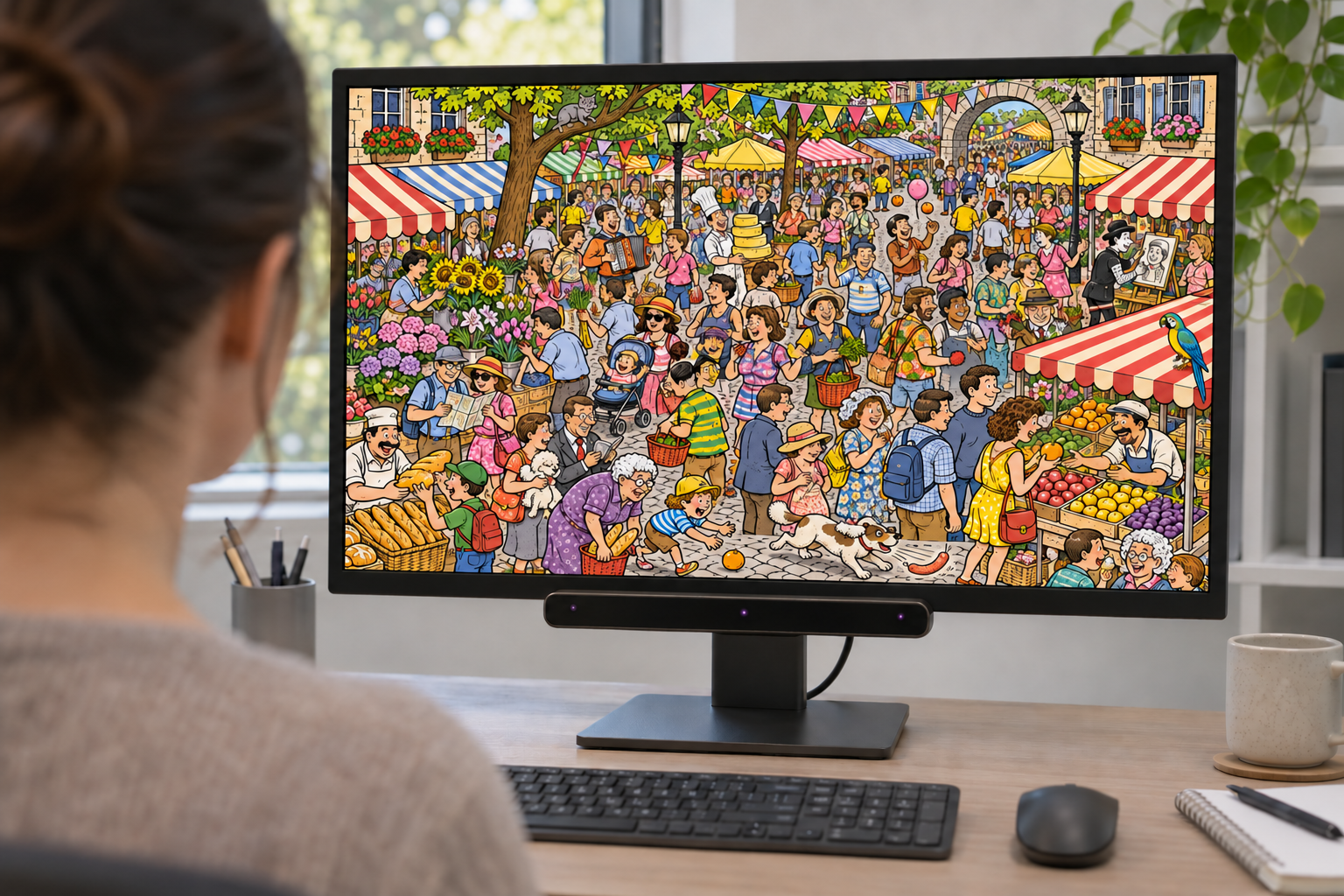
Finding Waldo in a crowd took about 16 seconds when a cash prize was up for grabs. Without that incentive, it took about 25. An eye tracker showed where much of the time went. Students who had a shot at the prize moved on to new parts of the picture sooner.
Orit Shdeour, a researcher who studies visual attention at Tel Aviv University in Israel, and colleague Shlomit Yuval-Greenberg wanted to know how a reward speeds up a search. They randomly split 40 students into two groups and analyzed results from 37, they report in Scientific Reports. Students searched scenes from the Where’s Waldo? books on a computer. For one group, each correct answer faster than the median for that picture earned an entry in a drawing for 200 Israeli shekels.
The 9-second gap came from trials in which students found Waldo. Accuracy was similar in the two groups. Students eligible for the drawing paused their eyes at fewer spots, and early in the search they were less likely to revisit places they had already checked. The difference in how long they spent on an average look was less clear.
The experiment used one kind of picture puzzle and a small group of students. For the authors, what stood out was how much of the time savings came from where people looked. A reward, they write, “reorganizes the structure of search behavior.”
“reorganizes the structure of search behavior”— The authors write in Conclusions, first paragraph; quotation from the publication
The research
Orit Shdeour and Shlomit Yuval-Greenberg
Scientific Reports · Accepted
DOI: 10.1038/s41598-026-79243-1