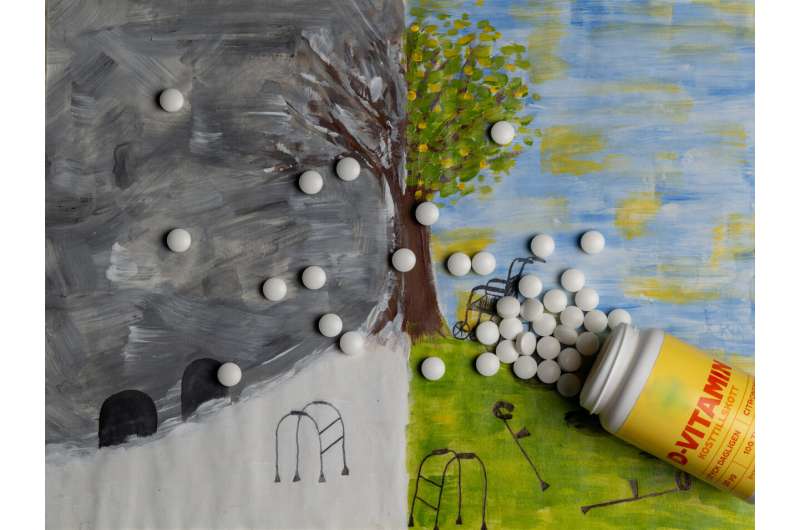
A low vitamin D reading in August may tell a different story than the same reading in February. In older Swedish adults, low levels were more strongly linked to fractures and death when blood was drawn in the sunnier months.
Medical epidemiologist Hannah Brooke of Uppsala University in Sweden and coauthors analyzed blood samples from 12,301 older adults and tracked fractures and deaths for an average of 11 years. Among people tested from July through September, those with the lowest levels had about twice the fracture rate and nearly three times the death rate of those with the highest levels, after accounting for factors such as age, exercise and existing health conditions. For tests from January through March, the same comparison showed no clear difference in fracture rates and a 36 percent higher death rate, the team reports November 24 in PLOS Medicine.
Sunlight helps the skin make vitamin D, and levels in the study peaked in August. The researchers suspect a low reading when levels usually peak may point to a more persistent shortage. As they write, “a measurement taken in the dark season does not reliably reflect vitamin D status year-round.”
The study followed older White adults in Sweden and can’t establish whether low vitamin D caused the poorer outcomes. The Endocrine Society advises against routine testing for healthy adults without an established reason to test. A trial enrolling people whose levels are low in summer could help answer whether supplements would make a difference for that group.
The research
Karl Michaëlsson, Jonas Höijer, Rikard Landberg, Liisa Byberg, Susanna C. Larsson, Bodil Svennblad, Håkan Melhus and Hannah L. Brooke
PLOS Medicine · Published
DOI: 10.1371/journal.pmed.1005080