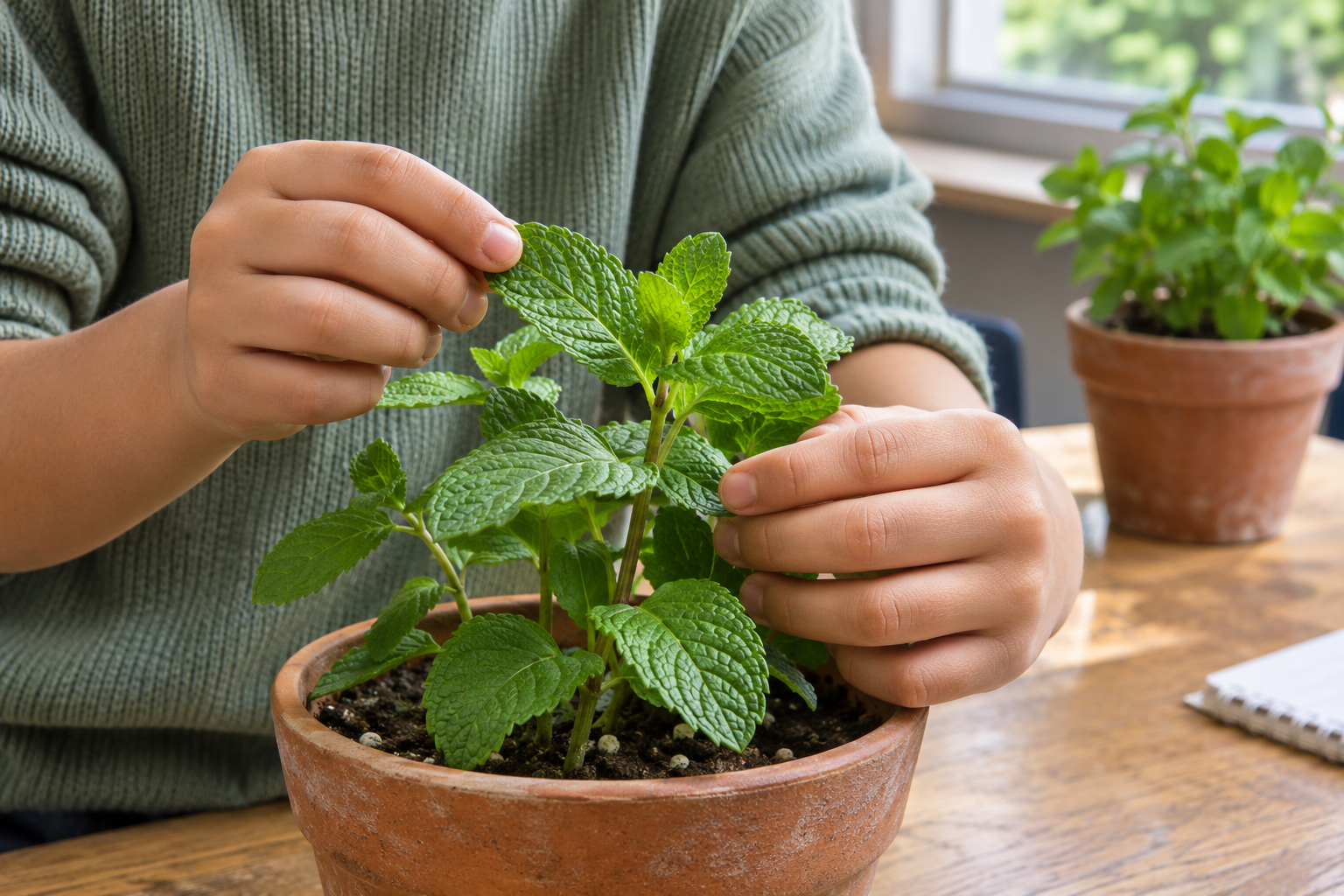
In a study of 120 fifth graders at a school in Taipei, children who handled mint plants indoors reported bigger gains in mood and attention than those who watched a video lesson indoors.
Outdoors, the researchers found no statistically significant difference in those gains between the hands-on and video groups. But on a separate attention task, changes in performance favored the indoor hands-on class over the outdoor hands-on class.
Chun-Wei Huang, a researcher at National Yang Ming Chiao Tung University in Taiwan, and coauthors compared four classes. One class handled mint plants indoors, and another did so outdoors. A third watched a video about mint plants indoors, while the fourth watched the same video outdoors. Each lesson lasted 30 minutes near the end of the school day.
The indoor hands-on group’s average self-rated attention rose from 3.58 to 4.08 on a five-point scale. Those children also described more varied things they had learned, including mint’s smell, taste and identifying features.
In the separate attention task, children watched a cube drawing that can appear to flip orientation and reported how often it switched. The indoor hands-on group did not improve significantly, while the outdoor hands-on group’s performance worsened.
Each activity involved just one class, so differences between classes could help explain the results. The researchers also excluded 17 children with unusually high or low starting attention scores; the remaining groups still differed on some initial measures.
The study suggests a promising way to bring contact with plants into schools short on green space. Whether it improves concentration beyond the immediate lesson remains untested.
The research
Chung-Heng Hsieh, Chun-Wei Huang, Wei Chien Benny Chin and Szu-Chia Liu
Scientific Reports · Accepted
DOI: 10.1038/s41598-026-77085-5